Gymnastics Reads

The books I’ve been listening to lately all involve gymnastics and abuse. I didn’t plan it that way. I listened to one, which made me aware that another existed, which reminded me I needed to listen to Dominique Moceanu’s memoir.


Twisted is a nonfiction book that focuses on multiple women who were interviewed to tell their story of being abused at the hands of Larry Nassar, the Michigan doctor who was convicted of sexual abuse and sentenced to up to 175 years in prison. I’d vaguely heard of the doctor before listening to the book, but this audiobook was the first time I learned the details of what Nassar did. I don’t recommend the book to anyone who is easily triggered by abuse stories. The women’s stories will anger and sadden you.

Another book I listened to recently is What Is a Girl Worth? Rachael Denhollander’s memoir of surviving sexual abuse. A teen victim of Nassar who came forward and helped to ignite the furor that got Nassar indicted, Denhollander’s account will enrage you. Why were her complaints not taken more seriously? Why did Michigan State University and USA Gymnastics not have a better system in play to handle abuse allegations? Here are answers to two popular questions that so many of these victims are asked:

Why didn’t you tell someone?

They did tell someone. They told their parents. They told their coaches. They told police. In many cases, the girls and women were gaslighted or simply not believed. Some of the people in charge were blinded by Larry Nassar’s sweet demeanor and professional occupation. He lied and said he was doing pelvic floor manipulation on many of his victims. Pelvic floor manipulation is a real technique, but Nassar wasn’t doing it the right way. Instead, he touched the victims inappropriately. In many cases it was just the victim’s word against Nassar’s.

Why didn’t you come forward sooner?

Many of them did come forward sooner. There are reports from women who reported Nassar as early as the 1990s. He wasn’t officially indicted for anything until 2016.

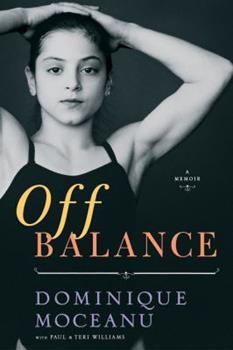
The third book I listened to is Dominique Moceanu‘s memoir, Off Balance. It focuses as much on her forming a connection with the estranged sister her parents gave up for adoption as it does on Dominique’s gymnastics career. Overall, I enjoyed this one purely for the stroll down memory lane. Dominique and I are the same age, and I remember following the Summer Olympics on television in ’96, the year when she and the other members of the Magnificent Seven won gold in Atlanta. Moceanu does include some details about her training with Bela and Marta Karolyi, the two coaches who trained champions at their Texas ranch for generations. She alleges abuse, and I believe her. It’s competitive gymnastics, a cutthroat world that focuses more on medals than anything else. Moceanu survived physical and emotional abuse at the hands of her father, who pressured her to perform and moved his family across the country several times for her gymnastics training. There’s also an unresolved subplot involving him attempting to hire hitmen to kill both Moceanu’s friend and her coach. (!!!)

Every one of these books is worth a listen.
Big Sky, Episode 3 (“The Big Rick”)

My boyfriend and I have started watching this show together on Tuesday nights. It’s a fun time for us. I’d forgotten how much fun it is to talk about your favorite shows with your friends. In college, I used to watch Felicity together with a friend on the phone while I lay across the single bed in my dorm and she laughed through the receiver into my ear. Fun times.

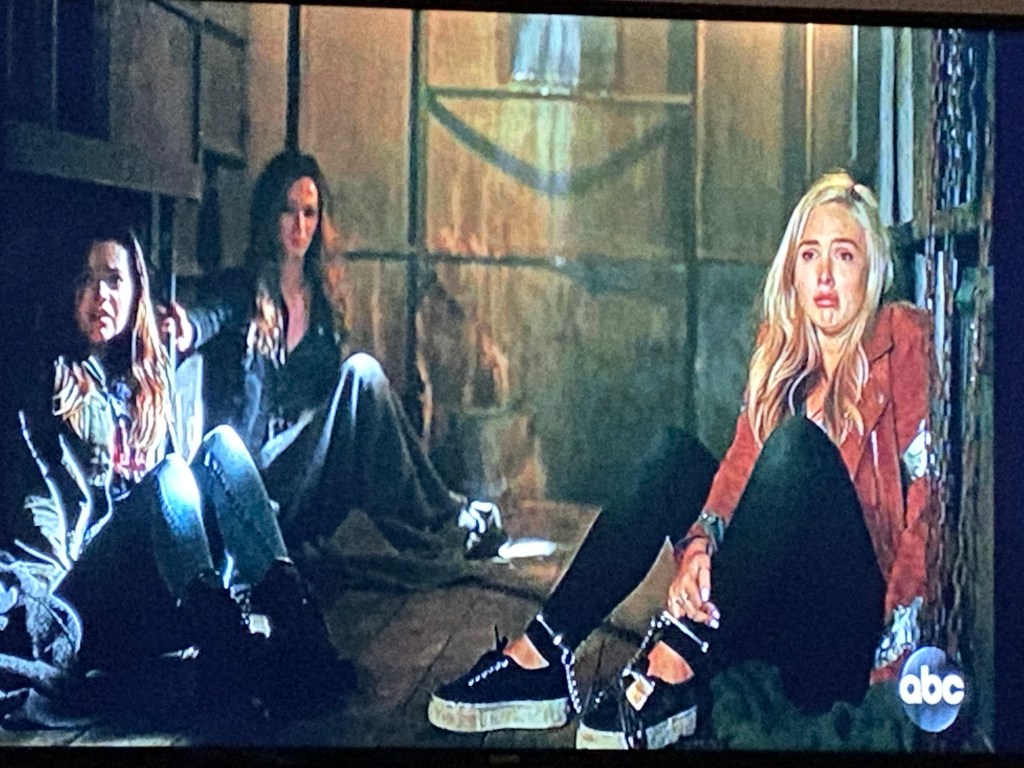
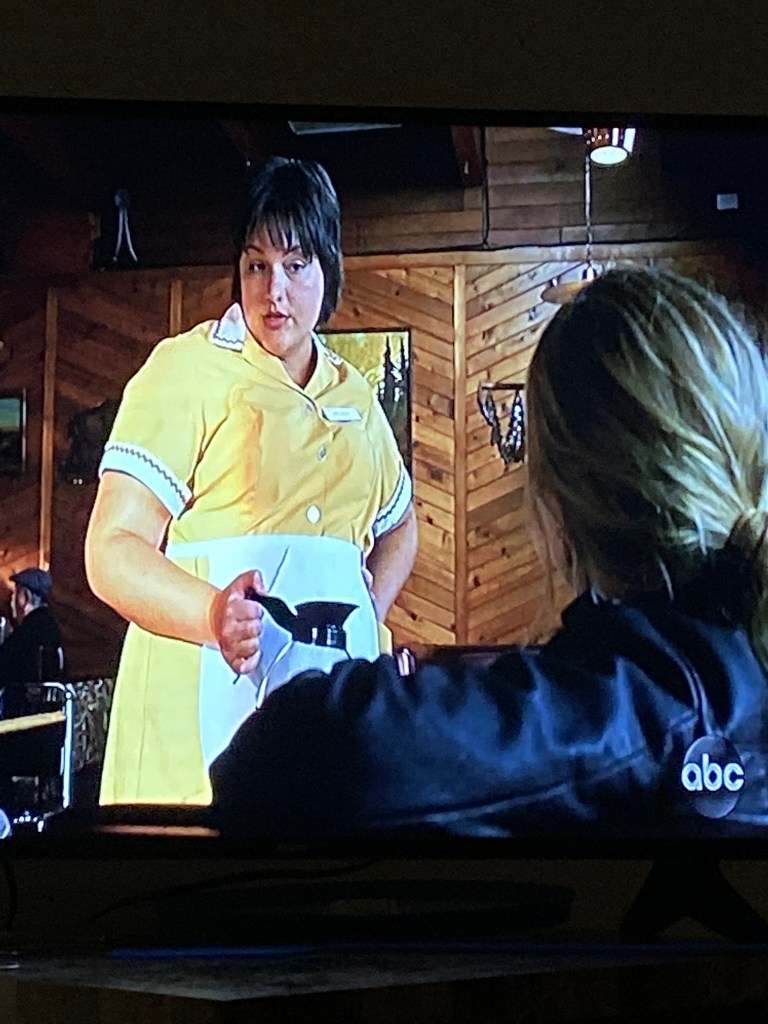
Anyway, in this episode Grace and the other two captives are able to bang a loose board long enough to allow Grace to squeeze out of the trailer. It was a pretty improbable scene, at least to my boyfriend and me. If Grace could crawl out, then why couldn’t the other two? Anyway, Grace crawls through the loose metal sheeting, and it somehow clamps back tightly together. She cant find the door that the deranged trucker uses to enter and exit the bunker, but she can find a pipe with flowing water in it. She frantically tears up the floor and finds a way into the ground just before Ronald the insane trucker bursts in and dives into the underground pipe in pursuit of her. The ground caves in between the two of them, and Ronald barely makes it out. He can’t tell if Grace has been buried alive or if she managed to crawl through to the other side.

Meanwhile, the other two girls are still trapped inside the metal trailer. Danielle screams frantically after hearing the cave-in.

Ronald confesses to Legarski that Grace is either buried alive underground or else she escaped and could be free on the other side. A peeved and worried Legarski takes off in some sort of fancy four wheeler that has a small storage thingy on the back of it just large enough to transport a body…

By this time, the drama is so intense I’m on the edge of my seat. Go, Grace, go!

Photo credit: ABC.com

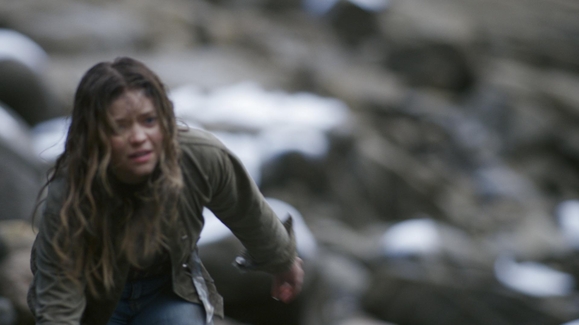
Grace manages to climb completely through the underground drainage and out into the woods. She finds a fisherman in a stream and frantically tells him that she was being held captive and that others are still in captivity. Help her, please!

The fisherman looks like he wants to take her to safety, but lo and behold, Legarski spots them and pulls out a nifty crossbow and shoots the fisherman dead right in front of Grace. Wow, this is only episode three and he’s already stacked up two bodies. Grace is horrified, and Legarski, whom Grace doesn’t know and has never seen before until that point, attempts to manipulate her into thinking the fisherman was dangerous, and he even tells her he overheard her use the word “kidnap” or “captive,” and that he thought the fisherman might harm her. Grace doesn’t buy what Legarski is selling, so she shoves a fishhook into his cheek and tries to run away. Halfway up an incline littered with boulders, she’s slowed by the arrow Legarski shoots into her leg. Still, she tries to run, and he responds with an exasperated, “Are you kidding me?!” before piercing her leg with a second arrow. She appears to pass out, and he tosses her on the back of his four-wheeler.

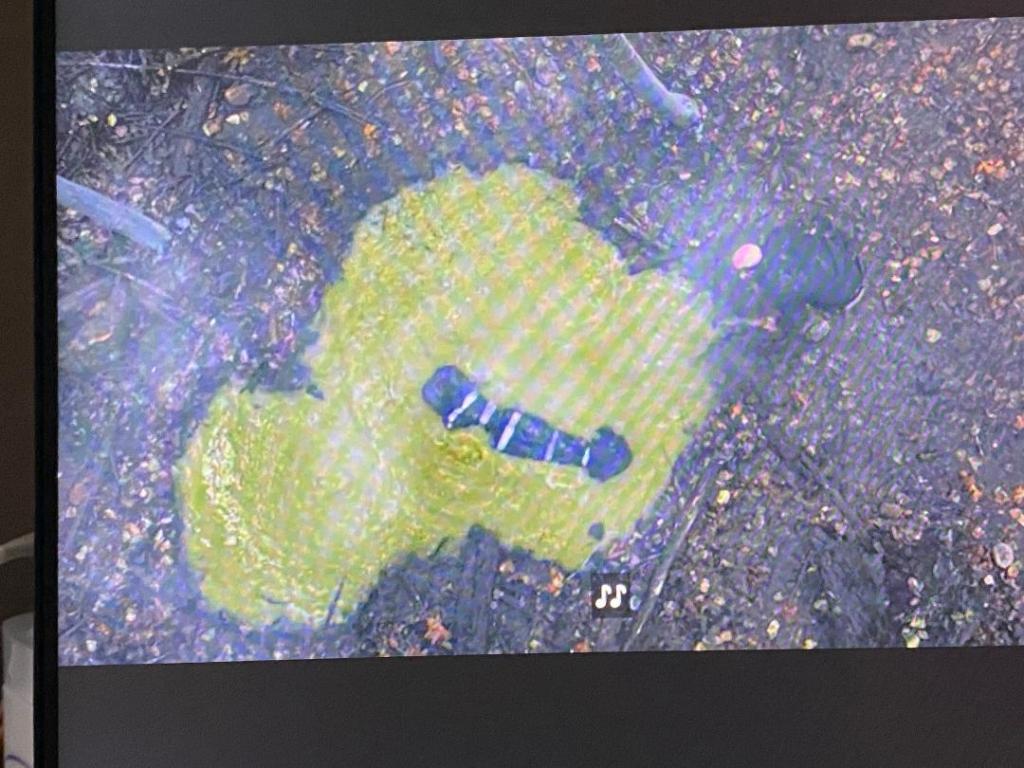
Legarski wraps the fisherman in a plastic bag held together with duct tape. Why does he just happen to have these things on hand? How many folks will this man kill? Certainly, the fisherman’s family will scout that location in a future episode to search for their missing loved one. Legarski throws the fisherman’s body into some green, sulfur-y lake that looks like it belongs in my nightmares. Seriously, the water looks like it’s bubbling, and smoke rises above it like in those pictures you see of witches’ cauldrons.

Pic courtesy of ABC

Meanwhile, Danielle, after hearing the ground cave in and possibly kill Grace, has dried her tears. Rather than trying to squeeze out of the hole Grace climbed out of, Danielle and Jerrie share a heart-to-heart about bigotry. Jerrie admits her parents put her in therapy when she told them she was a girl. When the therapy failed to “cure” Jerrie, her parents put her out of the house when Jerrie was just fourteen years old. Jerrie reveals all of this to Danielle and they squeeze hands rather than try to escape. I appreciated that scene, but it felt like it came at the wrong time. The girls should be trying to jailbreak just then.

The best dialogue of the episode comes from Jerrie, who asks Legarski, “Aren’t you here to help us?” when he carries an injured and duct taped Grace back to the trailer dungeon while clad in his policeman’s uniform.

I’m much less invested in what Cassie and Jenny are doing. All they know so far is that they have a bad hunch about Legarski, especially after he fails to get them a search warrant for the church/cult compound that Cody was en route to on the day of his disappearance. Jenny does visit the compound, a place where young women are courted by much older men. The church security footage shows, of course, that Cody was never on the campus there at all. Jenny and Cassie are no closer to finding Cody than in the last episode. I don’t even care about Cody’s death nearly as much as I do about the kidnapped girls’ fates.

See you next week, Montana peeps.

The Buddha in the Attic

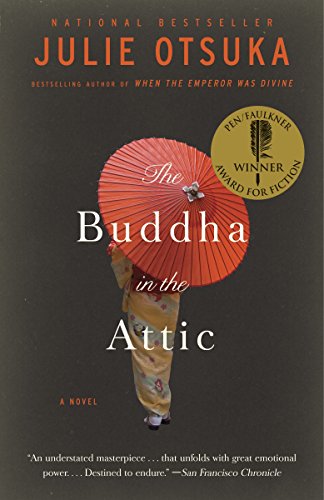
Julie Otsuka’s book, The Buddha in the Attic is the story of a group of Japanese picture brides who come to America in the early 1900s to marry a group of Japanese men. The women have never met their husbands before they arrive, and many are gypped into marriage by lying men who claim to have a good, middle-class life, but instead are struggling financially and need someone to help run a farm or do other manual labor. We also get to see how the brides’ American-born children assimilate into American culture. Throughout the story, the wives also contend with racism directed at them from whites, especially after Pearl Harbor. I think the internment of Japanese-Americans during the second world war is something that doesn’t get as much attention in history classes as it deserves, though hopefully this is changing now. When I was a high school and college student 15-25 years ago, we mostly focused on what was happening in Europe during that war, and I don’t remember ever being taught that Japanese people right here in America were being unjustly held as prisoners. Kudos to Julie Otsuka for teaching me that and allowing me to give that knowledge to my American literature students this semester when I taught this gem of a book for the first time. Some students were put off by the book’s narrative style. It’s told in a plural first-person. After a while, I got used to it and found the repetition rather poetic. I’ll teach it again next semester. 

Big Sky, Episode 2

Photo credit: ABC TV

In this episode, Ronald the-trucker-guy has our three kidnapped females in a big, metal storage trailer underground. He conspires with Legarski, the highway patrol guy, about what to do next. Legarski tells him that they can possibly sell the prostitute simply because he thinks no one will be looking for her, but he doesn’t think they can sell the other two because they look too wholesome and college-bound and that their families and friends will look for them. He turns out to be wrong later in the episode when a waitress at the local diner tells Jenny that she misses her friend Jerrie the prostitute.

Photo credit: ABC TV

Danielle catches on that Jerrie is trans. She flat out asks her if she has a penis. Jerrie confirms that she does. Later, Ronald takes Jerrie out of the metal trailer and forces her to undress and wash herself. He tells her he’ll be sending her elsewhere, which I take to mean he intends to sell her to Canada. However, once he sees her naked he decides not to send her away. I knew she was either trans or intersex in episode one, though I wondered if any of her clients ever caught on to this. Imagine if she were to solicit a man under the guise of being female. Wouldn’t that customer be disappointed to see that she has a penis? Also, I was cool with Ronald not realizing she was trans and only discovering it when he sees her in the shower, especially since she could definitely pass as a female, but I thought the moment where she pulls off her wig was a bit much. Reminds me of those movies and shows where the man in drag always takes his hair off to show that he’s really a guy. Feels unnecessary and silly to me. Hair is not what makes a person look male or female. Her strong jawline is what made me wonder if she was intersex or trans.

Photo credit: ABC TV

Grace and Cassie seem to be the two smart people on this show. Grace tries to conspire with the others to devise a plan to get them out of the trailer, though she loses her temper and head butts Ronald and only makes him angrier. At least she thinks and tries, though. The other thinker is Cassie, the detective that Legarski is sure to point out is “beautiful and black,” which, according to him, makes her a rarity in Montana. Cassie is smart in that she’s intuitive enough to realize something is not quite right about Legarski. He creeps her out and she knows from just a few minutes alone with him that he must be in on the disappearances. Still, smart as Cassie seems, she also makes some silly choices. First, she lets Legarski know that she suspects a long haul trucker might be involved in the disappearances, a detail that immediately puts Legarski on high alert. Cassie also makes the mistake of sitting out in her car to call the office secretary and tell her something isn’t right about Legarski, and she does this instead of just driving the hell outta there. Lucky her, though, Legarski realizes he can’t make her disappear in the way he did Cody, or else people will know for sure he’s in on the disappearances.

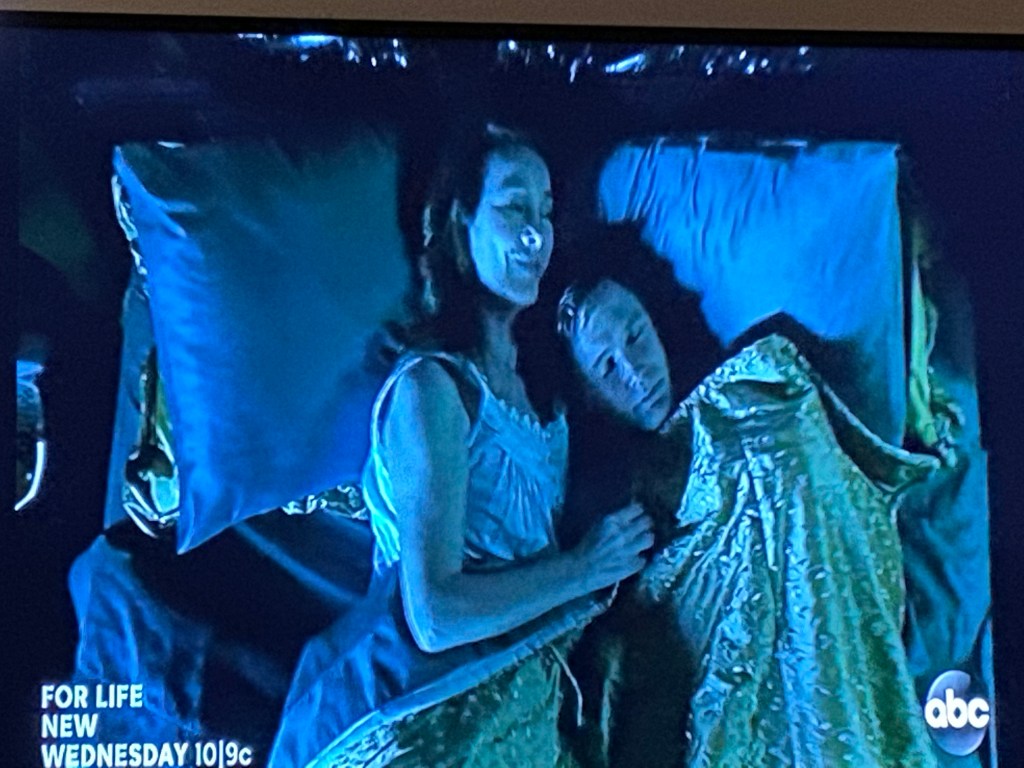
Ronald’s relationship with his mother looks crazier and crazier. In this episode, he climbs into bed with her at night because he can’t sleep. This is definitely appropriate behavior for an elementary school kid, but not for a 38-year-old man.

Photo credit: ABC TV

I’m waiting for his mother to realize that Ronald is into something illegal. Does Ronald actually carry any goods in his big truck, or is it only used to transport his kidnapping victims? Does he fail to bring home a regular check? If so, his mother would definitely notice these things.

I think the writers are getting the language wrong at times. Both Ronald and Legarski use “fixing to” at some point in episode two. I’ve never been to Montana, but I’m willing to bet my house that “fixing to” isn’t a common phrase around there. It’s a Southern dialectical phrase, at least I think it is. Perhaps the writers are Southern and trying to make these men sound folksy but are choosing the wrong phrasing at times. “Easy peasy” was a phrase that fit, but not “fixing to.”

There’s some lovely singing throughout the episode, especially at the end when the three captured women sing “Down in the River to Pray,” but the song doesn’t fit the setting. The song reminds me of Appalachia, and I would also associate it with the Southern church hymns I grew up with before I would associate it with Montana. But maybe I’m reading too much into it. Folk songs are folk songs. People around the country probably know that song, whether they’re Southern or not. Still, I love the song, and the cast “sounded” lovely as they lip-synched it.

Big Sky (Episode 1)

This site has mostly focused on reviewing books I’ve been reading. Tonight, I saw the premiere of Big Sky, a television series based on a book series by C.J. Box. I haven’t read the books, but the teaser for the pilot episode of the show intrigued me.

One thing I really like is that the show includes an androgynous character. The character, who appears to play/pass as a woman, is a prostitute who climbs into the cab of a trucker at a truck stop. The poor thing. Turns out the trucker is a psychopath who tases her and puts her in the trailer of his truck. I really hope the character survives and continues in this series. I think it’s so cool when shows include LGBTQ characters. It shows that television-land acknowledges the diversity of the world and of human experiences. Bravo!

There are two other plot threads. The first is the story of two teenage-ish sisters on a long road trip together. When they don’t show up at their destination, the boyfriend of one of the girls gets his father, Cody, a private investigator, involved. Cody, (played by Ryan Phillipe) gets in contact with a state trooper. Spoiler Alert: the trooper is in cahoots with the crazy trucker guy who has kidnapped the girls and the prostitute. The trooper shoots Cody the PI at the end of the first episode and then gets on the phone to call the trucker and ream him out about how sloppy he’s gotten.

The other plot thread involves Cody the PI and his two women. One woman is his estranged wife, Jenny (played by Katheryn Winnick). The other woman is Cassie, (played by Kylie Bunbury) their friend and partner at the private investigator business they run. The two women are both sleeping with Cody, and one thing I hated about the pilot was when the two women get into a brawl in a bar over Cody. So annoying. Please, writers, give these two women something to do in the next episode besides fight over a man.

Other things I disliked/hated:

–The psycho trucker has a nagging mother, which feels like something I’ve seen too often. The mommy issues remind me of Norman Bates.

–The young girls alone on a deserted road remind me of so many slasher movies. On film, nothing good ever comes out of car trouble at night in a wooded area. The minute the car breaks down, the audience immediately knows what to expect.

I’ll be back next week.

Photo credit: Deadline.com

Up a Road Slowly

Up a Road Slowly by Irene Hunt was a childhood favorite of mine. This past weekend I listened to it while shopping and working around the house. Wow! I can now say that Up a Road Slowly will remain on my all-time favorites list. It’s the sort of coming-of-age novel I’ve always loved. A young person grows and changes as she struggles through everyday life problems. It begins after the death of her mother when seven-year-old Julie Trelling goes to stay with her aunt in the country. She must contend with homesickness as she’s living near her father but no longer with him. Her brother, Chris, goes away to boarding school, and their older sister marries young. In the country with her aunt Cordelia, Julie survives her first romantic relationship, learns painful lessons about class differences and bullying, and even learns how to write fiction from her alcoholic uncle. The characters are flawed, yet I rooted for them. This is a book I’d recommend to anyone, regardless of age.

65954

What I’m Reading Now: My Year of Rest and Relaxation

Set around the turn of the 21st century, My Year of Rest and Relaxation made me feel a quiet nostalgia for the pop culture I grew up with. The unnamed, first-person narrator constantly gives a play-by-play of the movies and TV shows she watches throughout the book. The shows and films are mostly from the period of the 1980s through the early 2000s, which are basically my childhood and young adult years. Her favorite actors are Whoopi Goldberg and Harrison Ford.

But the book isn’t really about pop culture. It’s about a self-absorbed, self-indulgent, prescription drug-addicted New Yorker who loves exorbitant things like fur coats. She abhors everyday things like faux pearl earrings or modest-sized homes with low ceilings.

Did I mention that she loves drugs? She decides she wants to sleep more often than not for an an entire year and gets a quack psychiatrist to prescribe her pills for her depression/insomnia/neurosis. The narrator pops pills every day. When I say “pops pills,” I should really be saying, “swallows excessive amounts of pills.” She rarely takes just one of anything, unless she’s running low. Xanax. Ambien. Ativan. Trazadone. Valium. Lunesta. Lithium. She takes all of these along with alcohol and over-the-counter drugs like Benadryl. Scarily, after trying a new, highly potent drug, she begins to have days-long blackouts after which she cannot remember anything she did or said for about three days at a time. When she awakens from these blackouts, she’s dressed differently, has ordered food from local restaurants, and has even left the apartment with no recollection of doing so. Rather than scare her, these blackouts fuel her to take more drugs. During the few hours per day when she’s lucid, she watches movies and television. Her needy, neurotic, bulimic friend Reva occasionally comes over to chat or complain about her life. Sometimes the narrator has disgusting sex with Trevor, her spoiled, womanizing, on-again off-again boyfriend.

There’s a lot going on in this book and I didn’t feel bored. I listened to the whole thing in 2-3 days, which is pretty good for me, especially considering my propensity toward boredom. Still, would I recommend this book? Probably not. By the end of the story I realized I wasn’t reading for knowledge or even because I admired the prose. I read because I enjoyed the narrator’s voice and wanted to see if the book would go where I thought it was headed. I guessed partially right in regards to the ending, though I won’t spoil it for you here.

I’m not someone who has to like every character. However, I do have to care about what happens to at least one character in a story. I didn’t feel as if I was too invested in the lives of the narrator or Reva, both of whom come off as shallow. Reva puts a lot of value on trying to achieve a certain level of thinness, which annoyed me. The narrator constantly pats herself on the back for being a thin blonde, which also annoyed me. There are sooo many descriptions of her wild, drug-induced dreams and passages in which her snooty disdain for knock-off designer things are on full display. Perhaps most annoying of all is that the narrator constantly judges Reva while Reva grieves for a dead family member. The narrator is downright obnoxious most of the time, so if you can’t handle that, then you won’t like this book. However, I think the obnoxious narrator is there to prove Moshfege’s main point, which is that there are privileged people in this world whose lives are shit for no other reasons than their boredom and the unbelievable amount of freedom that money provides for them. Had the narrator needed to work for a living, she most likely would not have spent her life in a drunken stupor. If she had spent her life in a drunken stupor as a working-class woman, she may not have made it through to the end or had any hopes of getting better. Working-class drug addicts tend to fare much worse than wealthier ones. Thus, on that level, the novel does work. Moshfege, I think, is giving us a hard critique of one woman who has the luxury of having both time and money at her disposal. Rather than making the most of these precious commodities, she squanders both. 

About three-fourths of the way through, I looked forward to a possible overdose or something that might change this narrator or make her face her problems rather than sleep through them. Though we do see a change in the narrator at the end of the story, I can’t help but feel the ending gives very little payoff. I don’t believe what happens to the narrator because it happens too quickly. I feel the book would’ve been better had it focused slightly less on the drug-induced nightmares and more on the narrator’s transformation at the end.

To end on a positive note, I think the author has a real talent for characterization. Giving us the details about what these characters value helps us understand who the characters are.

My Year of Rest and Relaxation

Photo courtesy of Thriftbooks.com

What I’m Reading Now: Darling Rose Gold

I started Darling Rose Gold by Stephanie Wrobel last night on my Audible app. So far so good. It’s told in first-person from two narrators. One narrator is a mother named Patty convicted of child abuse via Munchausen’s Syndrome by proxy. The other narrator is the daughter, Rose Gold,  who testifies to put her mother Patty behind bars. The book begins with Patty’s release from prison and–surprise, surprise–it’s Rose Gold who shows up to pick up Patty and take her home. They share the house where Patty grew up, which Rose Gold has recently bought, unbeknownst to Patty and also to Patty’s horror.

The story moves back in time to show how Rose Gold’s illnesses began and how Patty “took care” of Rose Gold. All the while, the reader wonders about Patty’s motives and whether we can trust the story Rose Gold tells. Slowly, we learn that while Rose Gold is a victim of her mother’s manipulation, she’s also capable of that same type of toxic manipulation now that she’s a grown woman.  Rose Gold moves from believing she’s sick, to distrusting her mother, to attempting to trust her mother again to… I won’t spoil it for you.

From the very beginning, Patty, a master manipulator, comes across as an unreliable narrator who cannot be trusted. The media and the neighbors in their small town certainly see Patty as a monster who deliberately made her daughter sick.

I’m only a third of the way through this novel, so I cannot give a final verdict on it yet, but so far it slowly pulls the curtain back to reveal a complex mother-daughter relationship using two deeply flawed characters.

The two audible narrators are Megan Dodds and Jill Winternitz. I’ve never listened to these two readers before, but I really like their voices. For me, good narration in an audiobook is tantamount to good writing.

I look forward to finishing this book.

Darling Rose Gold

Photo credit: Amazon.com

What I’m Reading Now: Maude by Donna Mabry

I first heard Maude on a lengthy car trip from southern Mississippi to east Texas. At first I wasn’t too sure about the audiobook’s narrator, Shana Gagnon, but as time went on I grew accustomed to her accent, which sounded more Northeast than the expected Southern accent.

Maude is the story of a woman born in 1892 in rural Tennessee. She lives through many of the historic events of the twentieth century–the pandemic flu, the Great Depression and both world wars. While the story touches on all of these events, it’s really about her personal and family life and how she lives, loves, and survives through poverty, motherhood, and two marriages.

The book is one of my all-time favorites. I love how the story moves through time and lets us witness one family moving from the horse and buggy days to the modern era of running water and automobiles. I love the characters, too, and how Donna Mabry uses their dialogue and actions to characterize them. For instance, the mother-in-law “welcomes” her daughter-in-law on her first night in a new home by leaving her out on the doorstep, and the sheriff of a sleepy town takes frequent naps at his desk during the day.

Mabry tells the story in first-person from Maude’s perspective. The real-life Maude is Mabry’s paternal grandmother. As Mabry explains in her intro to the novel, her grandma Maude used to share a bedroom with her some evenings, and during those times Maude would share stories from her life. At the encouragement of her daughter, Mabry decided to write down the stories, and they became this novel, which I would call both uplifting and sad.

This weekend, I started re-listening to the novel on a short car trip to Knoxville, and it will be my go-to listen today while I’m on the treadmill. Gotta love these audiobooks!

Maude

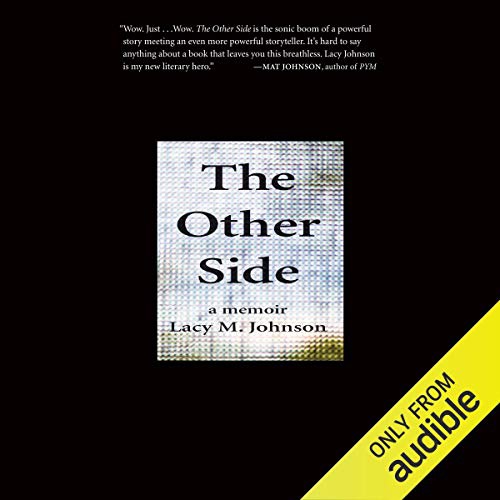
What I’m Reading Now: The Other Side by Lacy M. Johnson

The Other Side, a memoir written by Lacy M. Johnson, at first feels like the story of her rape and attempted murder at the hands of her ex-boyfriend. However, it’s more than that. It also tells the story of a woman who continues to suffer PTSD as a victim of such a crime as well as a constant fear that her tormentor will come back for her.

The structure of the memoir might alienate some readers because the transitions between events are not smooth. She skips back and forth and back between childhood events, details about ex-lovers, and more recent details of her life with her husband and children. At times it took me a moment to figure out where we were in time, which annoyed me. Perhaps the author wants the narrative to give off a feeling of confusion and uncertainty, as if she’s trying to somehow give the reader a teeny tiny glimpse of what it might be like to live in a fractured mind. While I see the possible reasons for telling the story this way, I can still say it frustrated me.

The audio version I listened to was read by the author and lasts only four hours. Though the book is succinct, at times I questioned why she included certain details about her life after the rape that didn’t feel directly connected to the rape. Perhaps she did it to give the reader a sense of her personality and life circumstances.

One positive thing I can say about this author is that she doesn’t try to charm the reader into liking her. A lot of nonfiction writers choose to present themselves in a “good” light, but not Johnson. She doesn’t shy from things that some women would be ashamed to admit, such as her time working as a stripper or that she lived with her abuser for over two years before he kidnapped her. Given people’s tendencies to blame a victim for abuse, I think adding these details shows both courage and honesty on Johnson’s part. Brava. 


Blog at WordPress.com.

Up ↑