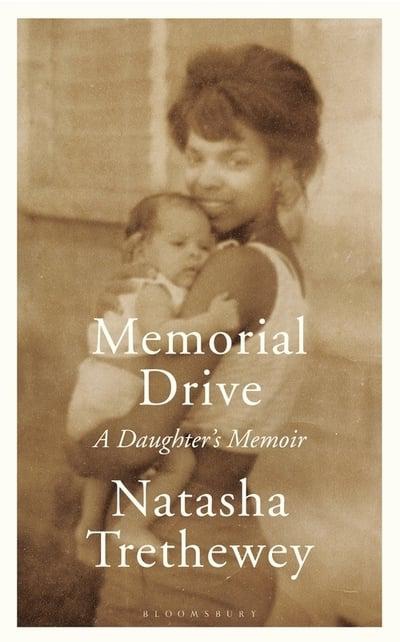
What I’m Reading Now: Memorial Drive by Natasha Trethewey

I’ve taught several of Trethewey’s poems in my literature classes. She’s definitely known more for poetry than nonfiction. This book, Memorial Drive is a memoir. I’m halfway through the audiobook, which is narrated by the author.

Trethewey was born to a white father and black mother in 1966. It was illegal for her parents to marry in Mississippi at that time. In her poetry, she often writes about being mixed race in the South. She definitely discusses Southern race relations in this story, but the real focus of it is on bearing witness to violence, her mother’s murder, and the impact it left on the author. This is a heartbreaking book and definitely worth a read. Just beware of the violent subject matter.

One thing I really like about this book is Trethewey’s penchant for taking tiny parts of her lived experiences and using them to help the reader understand her mindset at the time. For instance, she writes about being driven around the I-285 bypass in Atlanta by her mother’s boyfriend. In so few words, Trethewey clearly communicates how unsafe she felt with him and how powerless she was to do anything about it. She even mentions how triggering I-285 is for her years later when she returns to Atlanta. I could really understand her there. There are particular places that hold a lot of meaning for me and just visiting them can change my mood. I’m sure this is true for everyone.

Trethewey also writes in the second person in several sections of the book. At first, it gave me the feeling that she wants to sound detached in those moments. She even calls herself out for it midway through the book by saying that writing in second person is an attempt to distance herself from the girl who experienced these traumas. Still, I think it goes beyond that. The use of the second person creates a more personal reading experience. It connects with readers by making Trethewey’s story a shared experience with readers who’ve suffered similar traumas. By addressing the reader as “you,” she emphasizes that she’s not alone, that many of us also witnessed childhood trauma and still struggle to cope with it.

Photo Credit: Blackwells.co.uk

What I’m Reading Now: Things We Lost in the Fire by Mariana Enriquez

I’m a discriminatory reader who will try a story or two and give up if I don’t like them. However, Enriquez got my attention by starting strong. “The Dirty Kid,” the first story in her collection, focuses on a young woman living in a crime-ridden city in Argentina. She’s privileged and lives in a nice home, but she’s a daily witness to the poverty and crime around her. The woman helps a dirty boy who lives on the streets with his drug addict mother. Later, when she doesn’t see the boy and hears news about a young boy recently decapitated, she sets out walking to find the boy and his mother. I haven’t listened to the other stories yet, though I’ve previewed a few of them. Make no mistake: this is a violent collection, so it’s not for those who can’t handle violence or the macabre. Still, I’m looking forward to trying the other stories. The book is a translated audiobook. Ms. Enriquez is from Argentina.

Photo credit: Wordery.com

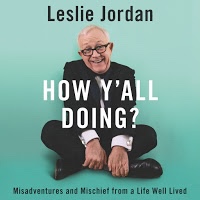
How Y’all Doing? By Leslie Jordan

Leslie Jordan is an actor from Chattanooga who has appeared in many well-known television series and films, such as Will and Grace, American Horror Story, and The Help. I first began to notice him last year during the height of the Covid-19 pandemic when he went viral on Instagram for posting his hilarious short videos:

His audiobook, How Y’all Doing? is just as hilarious as I expected, but it’s also a sweet and personable memoir in which he discusses his time working on a horse farm, his early days in Hollywood as an actor looking to scratch out a place for himself, and some of his most memorable film roles.

I read quite a lot of memoirs, and I think the best ones are honest and don’t try to paint the author in the best light. Jordan is honest about his self-centered nature, how much he craves the spotlight, and even reveals that he once had a drinking problem (though he doesn’t depress the reader with all the details). This memoir isn’t for those looking for a layered or deeply meaningful story, but it was just right for me this past weekend when I needed some laughs, and so I found myself returning to it until I’d gobbled it all up.

Photo credit: Google Books

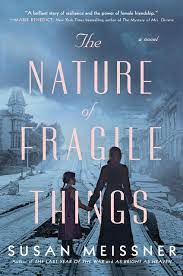
What I’m Reading Now: The Nature of Fragile Things by Susan Meissner

The Nature of Fragile Things is available on my library app. Susan Meissner has written more than a dozen books, but this is the first of hers that I’ve read. I’m about a 1/3 of the way through the audiobook and I’m enjoying it so far. It starts a little slow, which is normally something that I dislike, but I keep reading because the author does a good job of making me curious about the family relationships in this story. It begins with Sophie, an Irish immigrant living in New York who answers an ad for a mail order bride. She moves to San Francisco to meet her match, a widowed man who has a five-year-old daughter. The setup reminded me a lot of The Magic of Ordinary Days because both novels focus on the marriage of two strangers. The setup is a good one, too, because as readers we wonder what sort of strife this arranged marriage will create. Will she be attracted to her husband? Will he treat her cruelly?

These basic questions are answered right away. Her husband is an attractive man who owns a comfortable home and lets her mother his daughter in basically whatever way she pleases. Still, you can’t help but sense that something is awry with Sophie’s husband. He shows no affection for her, which isn’t that unusual sense they’re strangers, but he also shows no affection for his daughter either, not even so much as a hug or a kiss. The husband goes out of town on business and gives vague answers to questions about where he’s going, what he does, and when exactly he’ll return.

One day, a mysterious woman shows up at Sophie’s house while her husband is out of town. The woman gives Sophie some shocking news that changes the entire family dynamic and what both women think of Sophie’s husband. I won’t spoil it for you here, but that chapter really shocked me and made me sit up and pay attention.

The other thing to know about this one is that the San Francisco earthquake of 1906 is a key event in the story. I haven’t reached the earthquake part of the book yet, but I can clearly see that Meissner is dropping breadcrumbs to help the reader piece together a family mystery while we’re also anticipating the catastrophic earthquake. I love when an author complicates things with the emergence of several high stakes problems to solve at once.

This is exactly my type of book. I enjoy historicals and stories that focus on family strife. I’m also enjoying the lovely performance of the narrator who voices Sophie’s Irish accent. Looking forward to finishing this one!

Photo taken from Amazon.com

All We Ever Wanted by Emily Giffin

This was my introduction to Ms. Griffin’s work, and I am pleasantly surprised at how much I enjoyed most of this one. Usually I think books with trite titles will be predictable and/or saccharine sweet, but this one has well-developed characters and a believable twist near the end (though what happens at the very end is maddening, but feels true).

Pic taken from Thriftbooks.com

The author has also written some chick lit/love stories, though I think this book leans toward the shelves in the bookstore that just say, “fiction.” In a nutshell, the story focuses on two families—one lower middle-class and the other upper class. The wealthy son of one family attends private school with the middle-class daughter of the other family. At a party one night, the middle-class daughter, Lila, gets drunk and wakes the next day to learn that Finch, the rich kid, has a photo of her on his phone. The photo has been circulated around to nearly everyone at their prep school, and it shows her lying around semi-conscious with her boob out. There’s a racist caption attached to the pic that says something about her getting her green card (She’s part Brazilian).

The son tries to downplay the incident, and his father does the same. The mother, Nina, is the only one of the three of them who is appropriately appalled. The dad even goes so far as to attempt to pay the girl’s father off with $15,000 because he’s afraid his son will be kicked out of school and lose his place in the Ivy League.

One thing I enjoyed about the book was the subject matter. It feels all too familiar and real. I don’t like where the story took Finch, but I won’t spoil that for you here. I do like that the story is told in first person from three different narrators: Nina, Lila, and Tom (Lila’s dad). The voices are pretty distinct, and I enjoyed putting myself in each of the character’s shoes. For instance, what would I do if Lila were my daughter? How would I react at the end if Finch were my son?

I will look for more of Emily Giffin’s books.

Tennessee R.E.A.D.S.

After my previous library cancelled their subscription to RB Digital, I searched for a new audiobook app to replace it. Thanks to the library here in Putnam County, Tennessee, I was able to get a free subscription to Tennessee R.E.A.D.S., (AKA Regional E-book and Audiobook Download System) which has an app called Libby that allows library patrons to check out e-books and audiobooks. This service is not limited to Tennessee book lovers either. Check to see which reading apps are available from your local library.

Photo Credit: Seattle Public Library

The books available on Libby can be borrowed for two weeks at a time. I believe there’s a limit to how many books you can borrow at once, and I think it’s a pretty high number, something like 15-20. I also subscribe to Audible, which costs me about $25 monthly for two books plus discounts on thousands of others. However, I usually check Libby and Hoopla to see which books I can borrow for free before I buy an Audible.com book. This allows me to support my book habit without putting a strain on my finances.

Happy reading!

Podcast Review: “You’re Wrong About” with Michael Hobbes and Sarah Marshall

I found this podcast on Audible.com, and it’s included with my membership plan. Each episode focuses on modern-day scandals that have been misconstrued either by media or in the public imagination or memory. The two commentators, Michael Hobbes and Sarah Marshall, are 30-something millenials obsessed with pop culture. Their snarky commentary tickles me. Generally speaking, each episode involves educating the listener on research compiled by one of the hosts in regards to a popular a scandal. For instance, Sarah Marshall, who is obsessed with the Tonya Harding case, has read many articles on Tonya Harding as well as Tonya’s own book. Marshall then presents what she thinks are little-known pieces of info about the Harding/Kerrigan scandal of the 1990s.

Some criticize the hosts for not giving a more in-depth look at each case. However, I don’t go into each episode expecting a PhD-level dissertation. It’s mostly a talk show in which the hosts give their own viewpoints and cultural criticism, which is mixed in with some research on the topic.

Photo Credit: Audible.com

Just a few of the episodes I’ve enjoyed so far are listed below:

—Tonya Harding. In this one, Sarah takes up for Tonya and basically says the part we got wrong is that Tonya was unfairly maligned due to people perceiving her as “white trash.”

Photo Credit: Arkansas Democrat-Gazette

—Kitty Genovese and “Bystander Apathy.” The hosts explain bystander apathy. They also discuss the 1964 New York Times article that unfairly blamed bystanders in New York for not acting upon witnessing a woman’s death.

—Dan Quayle and Murphy Brown. In this one, Marshall criticizes Dan Quayle for maligning Murphy Brown for having a baby out of wedlock.

Photo Credit: The Society Pages

—The Wardrobe Malfunction. Hobbes explains the scandal and fallout related to Justin Timberlake exposing Janet Jackson’s boob to a television audience at the 2004 Super Bowl.

—Halloween Special! Ed Gein and Slasher Movies. Marshall presents her research on Ed Gein and explains how his story influenced the slasher genre of horror movies.

—Urban Legends Spectacular. The hosts discuss popular urban legends and how those legends are often linked to society’s own fears about crime and boogeymen.

—Jeffrey Dahmer. Show focuses on Dahmer’s crimes as well as mistakes in policing that allowed him to hide in plain sight.

The podcast usually presents a new issue every week or so. I look forward to more.

Girl Talk #10: Falling in Like

I first read this book in middle school. Before I started re-reading it this past weekend, I could still recall one detail: Allison walks into an event and feels others staring at her and judging her. She thinks to herself, “I was proud to be there with Billy.”

The fact that I can recall this tiny bit of a scene is a huge compliment to the author. For many books, especially those I read 20+ years ago, I’m unable to evoke any memories at all. Girl Talk is one of those series that I can still recall specific details about.

In this one, Allison volunteers to tutor a fellow student named Billy Dixon who struggles in school. At first, Allison shows reticence to work with him after witnessing him yelling at another student in the lunchroom. In their first tutoring session, she notices that he’s very smart. He can multiply fractions in his head, and he even corrects her on a math mistake. Problem is, he corrects her in a hateful, “you’re a terrible tutor” way, and she cries.

Rather than run away, Allison becomes determined to help Billy, whom she sees as smart but lacking in discipline. As they continue working together she asks him over to her house to study. While the two of them read a story with Allison’s little brother Charlie, Allison notices that Billy makes several reading mistakes. Allison’s mama, a former teacher, later tells her that Billy may have a reading disorder. Allison realizes his difficulty with reading is probably the reason he gets so testy with her when they study English together.

Sam’s group of guy friends challenges Allison and her friends to a bowling competition. Allison, having never bowled before, worries about the competition. On the bowling night, they see Billy at the bowing alley, which has the clever moniker Lois Lane’s. After watching her bowl several gutter balls, Billy comes over to Allison and coaches her on how to hold the ball and when to release it. Greg Loggins notices that Allison begins to bowl better after the pointers from Billy, and he accuses them of cheating and gets belligerent about it. In a previous book, I believe Greg was the one who behaved obnoxiously during the 7th grade trip to Eagle Mountain. 😟

Allison finally bowls a strike, and when she turns to celebrate it with Billy, he’s gone. He probably bails due to Greg’s behavior. However, this feels slightly out of character for Billy, who doesn’t appear to scare easily in earlier scenes.

Billy asks Allison on a date. She feels excited but nervous because this will be her first date. The girls try to coach her on what to say during the date, but they just wind up giggling a lot.

Allison goes over to Billy’s house to convince him to take the reading test, which is important because it will determine if he has a disorder. His front yard needs mowing. The front porch sags. Inside, dirty dishes are piled up and Allison itches to clean the place. Allison implies to the reader that the house is so dirty because Billy has no mom (his mom died years ago), though she doesn’t mention where his father is or even think that a man could possibly run a household effectively without a woman. 😬

Anyway, Alison finds Billy in the basement with several older boys. They’re shooting pool, but when Allison comes in the boys begin to flirt with her. Allison is obviously uncomfortable about being cooped up in a windowless space with bad boys. How do we know these are bad boys? Because they wear ripped jeans and one of them refers to Allison’s teacher as a hag. Allison tries to talk with Billy, but he doesn’t come sit by her and he gives her the cold shoulder. Billy clearly feels jealous that all the guys want Allison, and his response is to stand there sulking while they flirt with her. She flees the basement and Billy follows her upstairs. She begins to cry as she runs from the house, ignoring Billy as he calls her name.

Later, Billy phones to apologize for his jerk behavior. One thing I notice about several of the boys in Acorn Falls is that they have fragile egos and often misbehave when jealous of another guy. We saw this in book #2 when Katie tries out for the hockey team and Scottie feels threatened by having a girl on the team, so his response is to physically hurt her on the ice as a way to soothe his ego. Later, when Michel moves to town in Mixed Feelings, Scottie feels jealous that Katie might like Michel, so Scottie snaps at Katie and treats her like crap. And what about Sabs and Nick? In book one, Nick assumes Sabs is flirting with another guy, so he uninvites her to the school dance. Sabs, Katie, and now Allison in this book, all easily forgive these boys’ insecure behaviors. 😟

Billy takes the test and discovers he does have a learning disorder. We assume that he’s able to get help and improve his grades. However all of that is pretty glossed over and the last part of the book focuses on the date, which includes dinner at the burger joint in town and attending the movie at the junior high. When Allison and Billy walk into the restaurant together, Stacy Hansen watches them obnoxiously, but Allison holds her head high. Billy holds her hand and later puts his arm around her at the restaurant as they sit with Billy’s group of older boys. Allison feels good knowing that Billy is “public” about the fact that he likes her. Maybe this is why adult me remembered the scene so many years after having read it the first time. Adolescent me must’ve envied that feeling Allison has. It’s a feeling of confidence that comes from knowing that someone cares about you and wants to show everyone. Sweet.

Here’s the cover. Allison looks bored or fed up. Billy looks tortured.

Last time I said Here Comes the Bride was my favorite book of the series. Falling in Like gives it stiff competition. In fact, I may have to change my mind and call this one my new favorite. 👍🏿👍🏿👍🏿

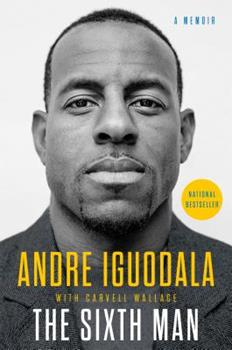
The Sixth Man by Andre Iguodala

I know I’ve mentioned my love of memoir before, but I’ve failed to mention that I particularly enjoy sports memoirs. Add Andre Iguodala’s book The Sixth Man to the list of ones I’ve read recently. I, of course, listened to the audiobook, as per usual these days.

Iguodala writes about growing up with a mother who taught him tough love in a town (Springfield, IL) haunted by its ugly, racist past. He goes on to play basketball professionally and becomes quite successful.

Photo Credit: Thriftbooks

My favorite part? When he describes being heckled by a fan who says things like, and I’m paraphrasing here, “Why’s this guy shooting? He’s only averaging 30% from the field!” That line cracked me up. Not only was the fan astute enough to know the player’s stats, but obnoxious enough to scream them aloud. That section of the book also surprised me because I’d never stopped to think about how much heckling hurts a player’s feelings. I’ve seen pro women’s tennis players react to being heckled. (One cried a few years back.) But for whatever reason I never imagined pro male players could be sensitive to criticism. I guess I thought they were made of steel or something. Boy, was I wrong. Iguodala makes it known that the heckling and the criticism from the press did get to him. He channeled negativity into something positive by motivating himself to work harder and prove his worth.

Iguodala doesn’t shy away from politics and money. He talks about the frustrations of being traded. He even describes how pissed he was when he made the comment, “I do what mastah say,” after being asked about his plans before a big game. As Iguodala’s book shows us, even wealthy blacks face racism, and being an athlete gives you a platform to shed light on important issues in our country, such as racism and class privilege.

Girl Talk #16: Here Comes the Bride

Of the Girl Talk books I’ve reviewed so far, this is probably the best one. Katie is surprised when her mother announces her engagement to Michel Beauvais’s father, Jean Paul Beauvais. This feels pretty sudden to me. I mean, they only started dating five books ago. Katie, of course, feels shocked and blindsided by the news. When she finds out she’ll be captain of next year’s hockey team, she’s bursting to tell her mom, but Mama Campbell, preoccupied with wedding details, ignores Katie.

The subplot involves the girls preparing for a 1960s-themed dance at school. They raid Sabs’s mom’s old boxes of clothes looking for outfits to wear. I enjoyed hearing them exclaim over hip-hugger pants and go-go boots. Later, Katie goes through clothes her own mom has stowed away in the attic. She learns that her mom was a hippie. Katie also begins to feel better about her mother marrying Jean Paul, and this comes after she has a heart-to-heart with her mom. They discuss the things they miss about Katie’s dad. One of my favorite things about this book was that Katie and her mom talked through some of the stress of a new family dynamic. Though Katie’s misgivings about her mother marrying someone who isn’t her father dissipate too quickly, I still enjoyed her chat with her mother. I think it’s because I’ve been interested in changing family dynamics in novels since forever. They fascinate me. How will the new siblings get along? How will the parents handle being stepparents?

Katie’s extended family members come to stay overnight with the Campbells the day before the wedding. I know that current of energy in a home that comes from having family all around and feeling everyone’s excitement as you await something special. When the wedding day finally arrives, Katie and Michel march in together. The other details are pretty banal. The bride and groom kiss. Sabs cries. Yadda yadda yadda.

Aside from Katie’s heart-to-heart with her mom, my other favorite part of this book comes at the dance. Katie dances with Scottie Silver, and Michel rudely cuts in. When Katie berates Michel for being so rude, he basically tells her that Scottie is a player and says he wants to protect Katie from Scottie since Katie is his sister now. Haha. I’m actually on Michel’s side. I’ve disliked Scottie ever since he abused Katie in book two when she tried out for the hockey team. But Katie doesn’t get it. She even admits she knows that Scottie goes out with a lot of girls. Ugh, Katie! When will you learn, sis? Sabs tells Katie that she better get used to Michel acting like a brother and looking out for her. A minute later when Stacey calls Michel immature, Katie takes up for him and warns Stacey not to talk smack about her brother. Though that whole conversation was corny as heck, I liked it. Love to see people standing up for one another. Of all the boys we have met so far in the Girl Talk books I’ve reviewed, Michel is easily the one with the most boyfriend potential. He’s handsome, bilingual, athletic, and a reasonable person. Mr. Perfect.

See you next time.

Blog at WordPress.com.

Up ↑