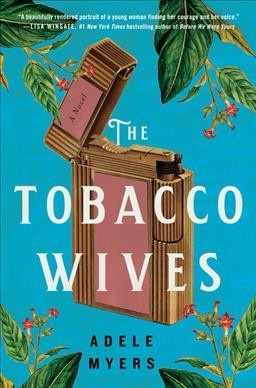
What I’m Reading Now: The Tobacco Wives

Adele Myers’ historical novel is set in 1946 North Carolina where 15–year-old Maddie has been dropped off to stay with her aunt Etta for the summer in Bright Leaf, a town known for growing tobacco and manufacturing cigarettes. Maddie’s aunt makes gowns and dresses for all the local “tobacco wives,” the upper class women married to the big bosses in the tobacco industry.

When her aunt becomes sick soon after Maddie arrives in town, it’s up to Maddie and her assistant, Anthony, to make the season’s dresses. It’s a lot of pressure on the shoulders of the 15-year-old, but she’s been sewing for years and it looks like she’s capable of pulling it off. One thing I like about Maddie is that she’s so independent. She knows she doesn’t want to end up depending on a man the way that her mother depended on her father. The backstory is that Maddie’s father passed away in WWII right before the novel opens. So our heroine is not only missing her absent mother that summer, but she’s also still mourning her father.

When people around Maddie start to become sick, Maddie struggles with exposing the truth about the toxicity of tobacco, especially in an environment where nearly everyone around her depends on the plant to survive.

The prose style is simple and easy to follow. Myers sprinkles in a few old-fashioned expressions and details about the culture of the time. I listened to the audiobook, and the narrator did a good job of varying her voice to match the various characters. The story is in first-person in Maddie’s voice. The narrator is expressive enough to keep my attention, and the southern accent is subtle.
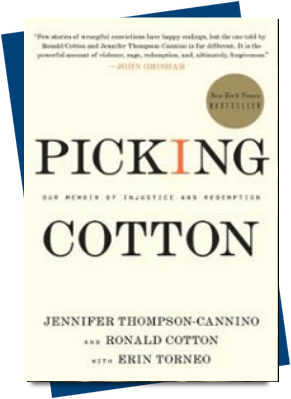
What I’m Reading Now: Picking Cotton

I’d highly recommend Picking Cotton. The story is told in alternate narration between a woman, Jennifer Thompson, and her accused rapist, Ronald Cotton. Jennifer is a twenty-something-year-old college kid in the first chapter. She goes home to her apartment and falls asleep. Later that night, she’s awakened to the sight of a strange man in her bedroom. He holds a knife to her neck and rapes her. Later, she tricks him into letting her go into her kitchen, and she gets a good look at him in bright kitchen light, memorizing his face. Jennifer is lucky enough to run for the back door and take sanctuary at a neighbor’s house. Horrifically, the rapist rapes another woman nearby on that same night.

I won’t spoil the book for you, but I will say there’s a case of mistaken identity in it. I like the alternating narrative style in which the book is written. We also get to follow the story of Jennifer’s convicted rapist and learn what his life was like both before prison and after his conviction. If you’d like to learn more about Jennifer’s and Ronald’s stories, there’s an old 60 minutes interview with both of them. There are spoilers in the interviews, so don’t watch the interview until after reading the book.

Photo credit: Google.com

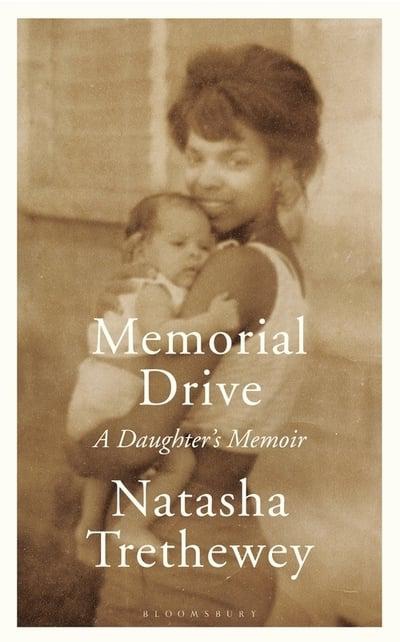
What I’m Reading Now: Memorial Drive by Natasha Trethewey

I’ve taught several of Trethewey’s poems in my literature classes. She’s definitely known more for poetry than nonfiction. This book, Memorial Drive is a memoir. I’m halfway through the audiobook, which is narrated by the author.

Trethewey was born to a white father and black mother in 1966. It was illegal for her parents to marry in Mississippi at that time. In her poetry, she often writes about being mixed race in the South. She definitely discusses Southern race relations in this story, but the real focus of it is on bearing witness to violence, her mother’s murder, and the impact it left on the author. This is a heartbreaking book and definitely worth a read. Just beware of the violent subject matter.

One thing I really like about this book is Trethewey’s penchant for taking tiny parts of her lived experiences and using them to help the reader understand her mindset at the time. For instance, she writes about being driven around the I-285 bypass in Atlanta by her mother’s boyfriend. In so few words, Trethewey clearly communicates how unsafe she felt with him and how powerless she was to do anything about it. She even mentions how triggering I-285 is for her years later when she returns to Atlanta. I could really understand her there. There are particular places that hold a lot of meaning for me and just visiting them can change my mood. I’m sure this is true for everyone.

Trethewey also writes in the second person in several sections of the book. At first, it gave me the feeling that she wants to sound detached in those moments. She even calls herself out for it midway through the book by saying that writing in second person is an attempt to distance herself from the girl who experienced these traumas. Still, I think it goes beyond that. The use of the second person creates a more personal reading experience. It connects with readers by making Trethewey’s story a shared experience with readers who’ve suffered similar traumas. By addressing the reader as “you,” she emphasizes that she’s not alone, that many of us also witnessed childhood trauma and still struggle to cope with it.

Photo Credit: Blackwells.co.uk

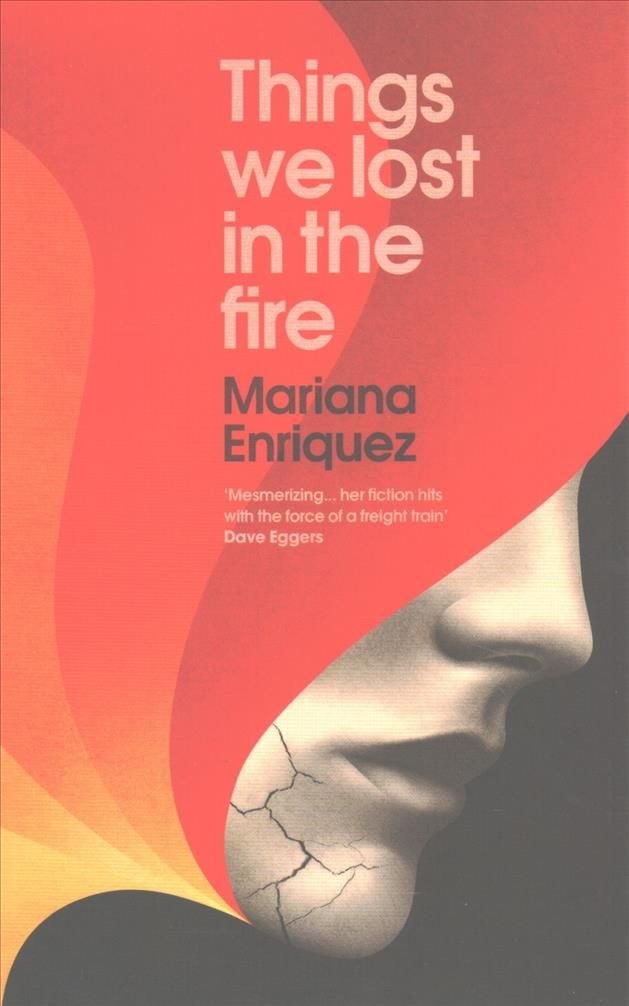
What I’m Reading Now: Things We Lost in the Fire by Mariana Enriquez

I’m a discriminatory reader who will try a story or two and give up if I don’t like them. However, Enriquez got my attention by starting strong. “The Dirty Kid,” the first story in her collection, focuses on a young woman living in a crime-ridden city in Argentina. She’s privileged and lives in a nice home, but she’s a daily witness to the poverty and crime around her. The woman helps a dirty boy who lives on the streets with his drug addict mother. Later, when she doesn’t see the boy and hears news about a young boy recently decapitated, she sets out walking to find the boy and his mother. I haven’t listened to the other stories yet, though I’ve previewed a few of them. Make no mistake: this is a violent collection, so it’s not for those who can’t handle violence or the macabre. Still, I’m looking forward to trying the other stories. The book is a translated audiobook. Ms. Enriquez is from Argentina.

Photo credit: Wordery.com

How Y’all Doing? By Leslie Jordan

Leslie Jordan is an actor from Chattanooga who has appeared in many well-known television series and films, such as Will and Grace, American Horror Story, and The Help. I first began to notice him last year during the height of the Covid-19 pandemic when he went viral on Instagram for posting his hilarious short videos:

His audiobook, How Y’all Doing? is just as hilarious as I expected, but it’s also a sweet and personable memoir in which he discusses his time working on a horse farm, his early days in Hollywood as an actor looking to scratch out a place for himself, and some of his most memorable film roles.

I read quite a lot of memoirs, and I think the best ones are honest and don’t try to paint the author in the best light. Jordan is honest about his self-centered nature, how much he craves the spotlight, and even reveals that he once had a drinking problem (though he doesn’t depress the reader with all the details). This memoir isn’t for those looking for a layered or deeply meaningful story, but it was just right for me this past weekend when I needed some laughs, and so I found myself returning to it until I’d gobbled it all up.

Photo credit: Google Books

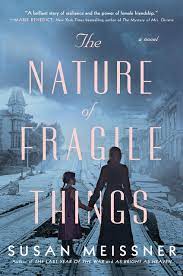
What I’m Reading Now: The Nature of Fragile Things by Susan Meissner

The Nature of Fragile Things is available on my library app. Susan Meissner has written more than a dozen books, but this is the first of hers that I’ve read. I’m about a 1/3 of the way through the audiobook and I’m enjoying it so far. It starts a little slow, which is normally something that I dislike, but I keep reading because the author does a good job of making me curious about the family relationships in this story. It begins with Sophie, an Irish immigrant living in New York who answers an ad for a mail order bride. She moves to San Francisco to meet her match, a widowed man who has a five-year-old daughter. The setup reminded me a lot of The Magic of Ordinary Days because both novels focus on the marriage of two strangers. The setup is a good one, too, because as readers we wonder what sort of strife this arranged marriage will create. Will she be attracted to her husband? Will he treat her cruelly?

These basic questions are answered right away. Her husband is an attractive man who owns a comfortable home and lets her mother his daughter in basically whatever way she pleases. Still, you can’t help but sense that something is awry with Sophie’s husband. He shows no affection for her, which isn’t that unusual sense they’re strangers, but he also shows no affection for his daughter either, not even so much as a hug or a kiss. The husband goes out of town on business and gives vague answers to questions about where he’s going, what he does, and when exactly he’ll return.

One day, a mysterious woman shows up at Sophie’s house while her husband is out of town. The woman gives Sophie some shocking news that changes the entire family dynamic and what both women think of Sophie’s husband. I won’t spoil it for you here, but that chapter really shocked me and made me sit up and pay attention.

The other thing to know about this one is that the San Francisco earthquake of 1906 is a key event in the story. I haven’t reached the earthquake part of the book yet, but I can clearly see that Meissner is dropping breadcrumbs to help the reader piece together a family mystery while we’re also anticipating the catastrophic earthquake. I love when an author complicates things with the emergence of several high stakes problems to solve at once.

This is exactly my type of book. I enjoy historicals and stories that focus on family strife. I’m also enjoying the lovely performance of the narrator who voices Sophie’s Irish accent. Looking forward to finishing this one!

Photo taken from Amazon.com

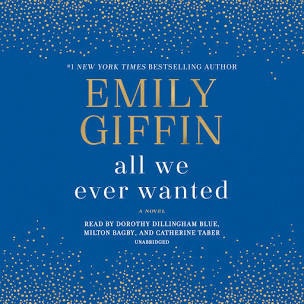
All We Ever Wanted by Emily Giffin

This was my introduction to Ms. Griffin’s work, and I am pleasantly surprised at how much I enjoyed most of this one. Usually I think books with trite titles will be predictable and/or saccharine sweet, but this one has well-developed characters and a believable twist near the end (though what happens at the very end is maddening, but feels true).

Pic taken from Thriftbooks.com

The author has also written some chick lit/love stories, though I think this book leans toward the shelves in the bookstore that just say, “fiction.” In a nutshell, the story focuses on two families—one lower middle-class and the other upper class. The wealthy son of one family attends private school with the middle-class daughter of the other family. At a party one night, the middle-class daughter, Lila, gets drunk and wakes the next day to learn that Finch, the rich kid, has a photo of her on his phone. The photo has been circulated around to nearly everyone at their prep school, and it shows her lying around semi-conscious with her boob out. There’s a racist caption attached to the pic that says something about her getting her green card (She’s part Brazilian).

The son tries to downplay the incident, and his father does the same. The mother, Nina, is the only one of the three of them who is appropriately appalled. The dad even goes so far as to attempt to pay the girl’s father off with $15,000 because he’s afraid his son will be kicked out of school and lose his place in the Ivy League.

One thing I enjoyed about the book was the subject matter. It feels all too familiar and real. I don’t like where the story took Finch, but I won’t spoil that for you here. I do like that the story is told in first person from three different narrators: Nina, Lila, and Tom (Lila’s dad). The voices are pretty distinct, and I enjoyed putting myself in each of the character’s shoes. For instance, what would I do if Lila were my daughter? How would I react at the end if Finch were my son?

I will look for more of Emily Giffin’s books.

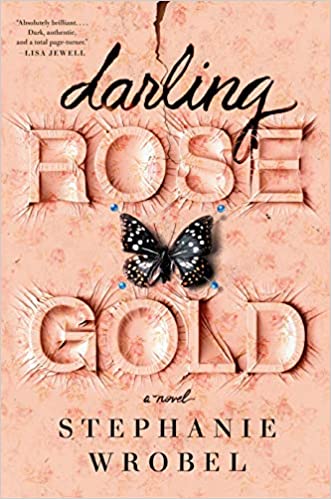
What I’m Reading Now: Darling Rose Gold

I started Darling Rose Gold by Stephanie Wrobel last night on my Audible app. So far so good. It’s told in first-person from two narrators. One narrator is a mother named Patty convicted of child abuse via Munchausen’s Syndrome by proxy. The other narrator is the daughter, Rose Gold,  who testifies to put her mother Patty behind bars. The book begins with Patty’s release from prison and–surprise, surprise–it’s Rose Gold who shows up to pick up Patty and take her home. They share the house where Patty grew up, which Rose Gold has recently bought, unbeknownst to Patty and also to Patty’s horror.

The story moves back in time to show how Rose Gold’s illnesses began and how Patty “took care” of Rose Gold. All the while, the reader wonders about Patty’s motives and whether we can trust the story Rose Gold tells. Slowly, we learn that while Rose Gold is a victim of her mother’s manipulation, she’s also capable of that same type of toxic manipulation now that she’s a grown woman.  Rose Gold moves from believing she’s sick, to distrusting her mother, to attempting to trust her mother again to… I won’t spoil it for you.

From the very beginning, Patty, a master manipulator, comes across as an unreliable narrator who cannot be trusted. The media and the neighbors in their small town certainly see Patty as a monster who deliberately made her daughter sick.

I’m only a third of the way through this novel, so I cannot give a final verdict on it yet, but so far it slowly pulls the curtain back to reveal a complex mother-daughter relationship using two deeply flawed characters.

The two audible narrators are Megan Dodds and Jill Winternitz. I’ve never listened to these two readers before, but I really like their voices. For me, good narration in an audiobook is tantamount to good writing.

I look forward to finishing this book.

Darling Rose Gold

Photo credit: Amazon.com

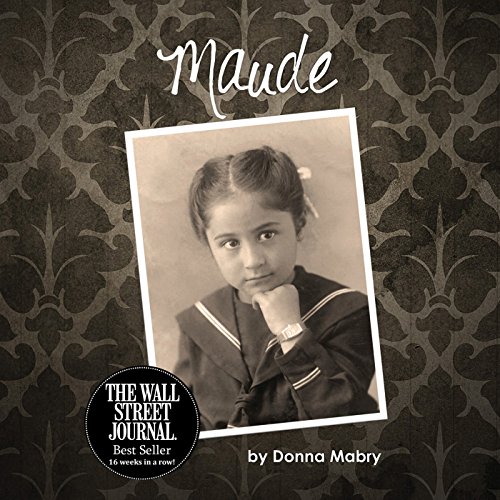
What I’m Reading Now: Maude by Donna Mabry

I first heard Maude on a lengthy car trip from southern Mississippi to east Texas. At first I wasn’t too sure about the audiobook’s narrator, Shana Gagnon, but as time went on I grew accustomed to her accent, which sounded more Northeast than the expected Southern accent.

Maude is the story of a woman born in 1892 in rural Tennessee. She lives through many of the historic events of the twentieth century–the pandemic flu, the Great Depression and both world wars. While the story touches on all of these events, it’s really about her personal and family life and how she lives, loves, and survives through poverty, motherhood, and two marriages.

The book is one of my all-time favorites. I love how the story moves through time and lets us witness one family moving from the horse and buggy days to the modern era of running water and automobiles. I love the characters, too, and how Donna Mabry uses their dialogue and actions to characterize them. For instance, the mother-in-law “welcomes” her daughter-in-law on her first night in a new home by leaving her out on the doorstep, and the sheriff of a sleepy town takes frequent naps at his desk during the day.

Mabry tells the story in first-person from Maude’s perspective. The real-life Maude is Mabry’s paternal grandmother. As Mabry explains in her intro to the novel, her grandma Maude used to share a bedroom with her some evenings, and during those times Maude would share stories from her life. At the encouragement of her daughter, Mabry decided to write down the stories, and they became this novel, which I would call both uplifting and sad.

This weekend, I started re-listening to the novel on a short car trip to Knoxville, and it will be my go-to listen today while I’m on the treadmill. Gotta love these audiobooks!

Maude

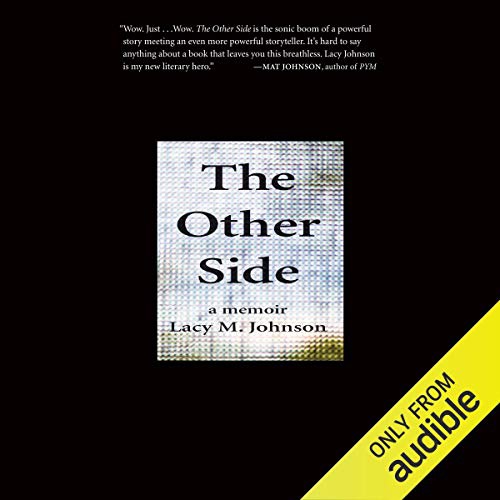
What I’m Reading Now: The Other Side by Lacy M. Johnson

The Other Side, a memoir written by Lacy M. Johnson, at first feels like the story of her rape and attempted murder at the hands of her ex-boyfriend. However, it’s more than that. It also tells the story of a woman who continues to suffer PTSD as a victim of such a crime as well as a constant fear that her tormentor will come back for her.

The structure of the memoir might alienate some readers because the transitions between events are not smooth. She skips back and forth and back between childhood events, details about ex-lovers, and more recent details of her life with her husband and children. At times it took me a moment to figure out where we were in time, which annoyed me. Perhaps the author wants the narrative to give off a feeling of confusion and uncertainty, as if she’s trying to somehow give the reader a teeny tiny glimpse of what it might be like to live in a fractured mind. While I see the possible reasons for telling the story this way, I can still say it frustrated me.

The audio version I listened to was read by the author and lasts only four hours. Though the book is succinct, at times I questioned why she included certain details about her life after the rape that didn’t feel directly connected to the rape. Perhaps she did it to give the reader a sense of her personality and life circumstances.

One positive thing I can say about this author is that she doesn’t try to charm the reader into liking her. A lot of nonfiction writers choose to present themselves in a “good” light, but not Johnson. She doesn’t shy from things that some women would be ashamed to admit, such as her time working as a stripper or that she lived with her abuser for over two years before he kidnapped her. Given people’s tendencies to blame a victim for abuse, I think adding these details shows both courage and honesty on Johnson’s part. Brava. 


Blog at WordPress.com.

Up ↑