Gymnastics Reads
The books I’ve been listening to lately all involve gymnastics and abuse. I didn’t plan it that way. I listened to one, which made me aware that another existed, which reminded me I needed to listen to Dominique Moceanu’s memoir.
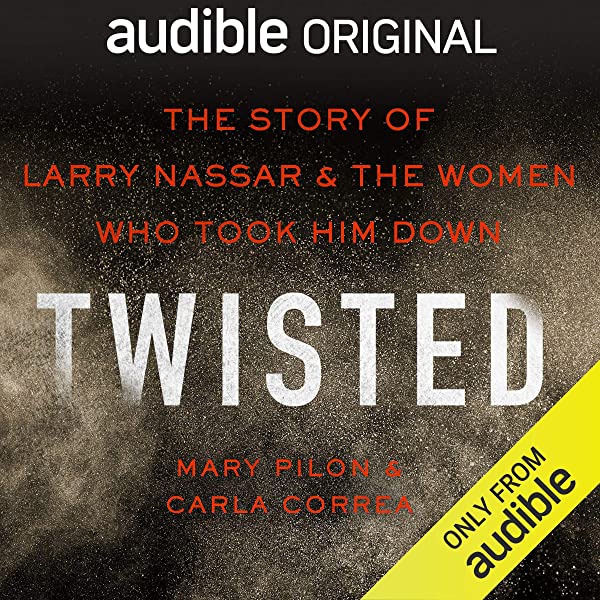
Twisted is a nonfiction book that focuses on multiple women who were interviewed to tell their story of being abused at the hands of Larry Nassar, the Michigan doctor who was convicted of sexual abuse and sentenced to up to 175 years in prison. I’d vaguely heard of the doctor before listening to the book, but this audiobook was the first time I learned the details of what Nassar did. I don’t recommend the book to anyone who is easily triggered by abuse stories. The women’s stories will anger and sadden you.
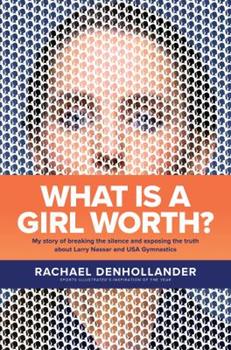
Another book I listened to recently is What Is a Girl Worth? Rachael Denhollander’s memoir of surviving sexual abuse. A teen victim of Nassar who came forward and helped to ignite the furor that got Nassar indicted, Denhollander’s account will enrage you. Why were her complaints not taken more seriously? Why did Michigan State University and USA Gymnastics not have a better system in play to handle abuse allegations? Here are answers to two popular questions that so many of these victims are asked:
Why didn’t you tell someone?
They did tell someone. They told their parents. They told their coaches. They told police. In many cases, the girls and women were gaslighted or simply not believed. Some of the people in charge were blinded by Larry Nassar’s sweet demeanor and professional occupation. He lied and said he was doing pelvic floor manipulation on many of his victims. Pelvic floor manipulation is a real technique, but Nassar wasn’t doing it the right way. Instead, he touched the victims inappropriately. In many cases it was just the victim’s word against Nassar’s.
Why didn’t you come forward sooner?
Many of them did come forward sooner. There are reports from women who reported Nassar as early as the 1990s. He wasn’t officially indicted for anything until 2016.
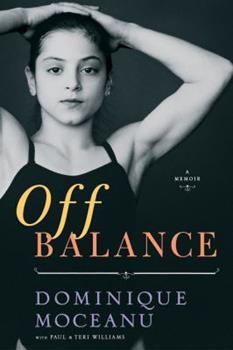
The third book I listened to is Dominique Moceanu‘s memoir, Off Balance. It focuses as much on her forming a connection with the estranged sister her parents gave up for adoption as it does on Dominique’s gymnastics career. Overall, I enjoyed this one purely for the stroll down memory lane. Dominique and I are the same age, and I remember following the Summer Olympics on television in ’96, the year when she and the other members of the Magnificent Seven won gold in Atlanta. Moceanu does include some details about her training with Bela and Marta Karolyi, the two coaches who trained champions at their Texas ranch for generations. She alleges abuse, and I believe her. It’s competitive gymnastics, a cutthroat world that focuses more on medals than anything else. Moceanu survived physical and emotional abuse at the hands of her father, who pressured her to perform and moved his family across the country several times for her gymnastics training. There’s also an unresolved subplot involving him attempting to hire hitmen to kill both Moceanu’s friend and her coach. (!!!)
Every one of these books is worth a listen.
Up a Road Slowly
Up a Road Slowly by Irene Hunt was a childhood favorite of mine. This past weekend I listened to it while shopping and working around the house. Wow! I can now say that Up a Road Slowly will remain on my all-time favorites list. It’s the sort of coming-of-age novel I’ve always loved. A young person grows and changes as she struggles through everyday life problems. It begins after the death of her mother when seven-year-old Julie Trelling goes to stay with her aunt in the country. She must contend with homesickness as she’s living near her father but no longer with him. Her brother, Chris, goes away to boarding school, and their older sister marries young. In the country with her aunt Cordelia, Julie survives her first romantic relationship, learns painful lessons about class differences and bullying, and even learns how to write fiction from her alcoholic uncle. The characters are flawed, yet I rooted for them. This is a book I’d recommend to anyone, regardless of age.

What I’m Reading Now: My Year of Rest and Relaxation
Set around the turn of the 21st century, My Year of Rest and Relaxation made me feel a quiet nostalgia for the pop culture I grew up with. The unnamed, first-person narrator constantly gives a play-by-play of the movies and TV shows she watches throughout the book. The shows and films are mostly from the period of the 1980s through the early 2000s, which are basically my childhood and young adult years. Her favorite actors are Whoopi Goldberg and Harrison Ford.
But the book isn’t really about pop culture. It’s about a self-absorbed, self-indulgent, prescription drug-addicted New Yorker who loves exorbitant things like fur coats. She abhors everyday things like faux pearl earrings or modest-sized homes with low ceilings.
Did I mention that she loves drugs? She decides she wants to sleep more often than not for an an entire year and gets a quack psychiatrist to prescribe her pills for her depression/insomnia/neurosis. The narrator pops pills every day. When I say “pops pills,” I should really be saying, “swallows excessive amounts of pills.” She rarely takes just one of anything, unless she’s running low. Xanax. Ambien. Ativan. Trazadone. Valium. Lunesta. Lithium. She takes all of these along with alcohol and over-the-counter drugs like Benadryl. Scarily, after trying a new, highly potent drug, she begins to have days-long blackouts after which she cannot remember anything she did or said for about three days at a time. When she awakens from these blackouts, she’s dressed differently, has ordered food from local restaurants, and has even left the apartment with no recollection of doing so. Rather than scare her, these blackouts fuel her to take more drugs. During the few hours per day when she’s lucid, she watches movies and television. Her needy, neurotic, bulimic friend Reva occasionally comes over to chat or complain about her life. Sometimes the narrator has disgusting sex with Trevor, her spoiled, womanizing, on-again off-again boyfriend.
There’s a lot going on in this book and I didn’t feel bored. I listened to the whole thing in 2-3 days, which is pretty good for me, especially considering my propensity toward boredom. Still, would I recommend this book? Probably not. By the end of the story I realized I wasn’t reading for knowledge or even because I admired the prose. I read because I enjoyed the narrator’s voice and wanted to see if the book would go where I thought it was headed. I guessed partially right in regards to the ending, though I won’t spoil it for you here.
I’m not someone who has to like every character. However, I do have to care about what happens to at least one character in a story. I didn’t feel as if I was too invested in the lives of the narrator or Reva, both of whom come off as shallow. Reva puts a lot of value on trying to achieve a certain level of thinness, which annoyed me. The narrator constantly pats herself on the back for being a thin blonde, which also annoyed me. There are sooo many descriptions of her wild, drug-induced dreams and passages in which her snooty disdain for knock-off designer things are on full display. Perhaps most annoying of all is that the narrator constantly judges Reva while Reva grieves for a dead family member. The narrator is downright obnoxious most of the time, so if you can’t handle that, then you won’t like this book. However, I think the obnoxious narrator is there to prove Moshfege’s main point, which is that there are privileged people in this world whose lives are shit for no other reasons than their boredom and the unbelievable amount of freedom that money provides for them. Had the narrator needed to work for a living, she most likely would not have spent her life in a drunken stupor. If she had spent her life in a drunken stupor as a working-class woman, she may not have made it through to the end or had any hopes of getting better. Working-class drug addicts tend to fare much worse than wealthier ones. Thus, on that level, the novel does work. Moshfege, I think, is giving us a hard critique of one woman who has the luxury of having both time and money at her disposal. Rather than making the most of these precious commodities, she squanders both.
About three-fourths of the way through, I looked forward to a possible overdose or something that might change this narrator or make her face her problems rather than sleep through them. Though we do see a change in the narrator at the end of the story, I can’t help but feel the ending gives very little payoff. I don’t believe what happens to the narrator because it happens too quickly. I feel the book would’ve been better had it focused slightly less on the drug-induced nightmares and more on the narrator’s transformation at the end.
To end on a positive note, I think the author has a real talent for characterization. Giving us the details about what these characters value helps us understand who the characters are.
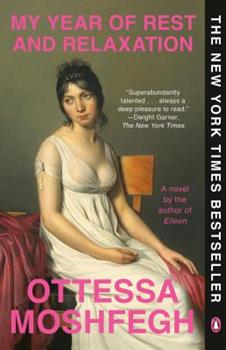
Photo courtesy of Thriftbooks.com
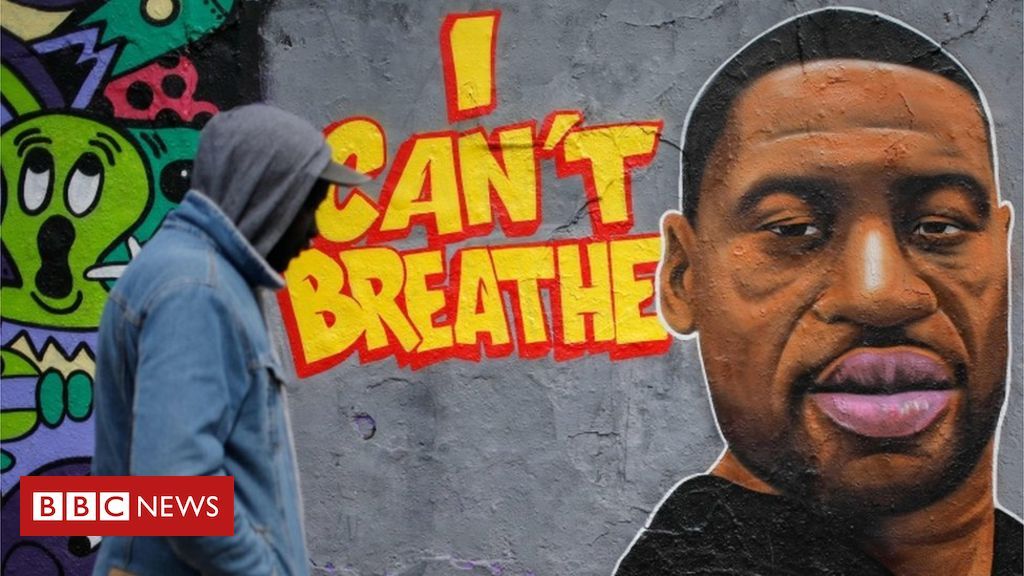
“I Can’t Breathe”: The Senseless Killing of George Floyd
I’m following the story about George Floyd. It’s unbelievable that he was choked on a sidewalk for eight minutes by police. The cops first said Floyd was resisting arrest, but I saw the video compiled by the New York Times. It does show that Floyd flopped on the ground, but it also shows that the officers were able to put him in the police vehicle. Then, he was dragged out of the vehicle and held down by two officers while another knelt on Floyd’s neck. The whole thing makes no sense.
Here are some questions I still don’t see answers for:
1. Why did Derek Chauvin kneel on Floyd’s neck even after handcuffing him? As onlookers pointed out in the video, Floyd was already on the ground in handcuffs. Why the need to inflict suffering on him? Plus, how could Chauvin have thought he could get away with this? There were onlookers and even people filming. The audacity of his actions angers and baffles me.
2. What were the other complaints already on Chauvin’s record? Has he been accused of using excessive force before? Also, he looked so comfortable with choking Floyd that it makes me worry that this isn’t the first time he’s knelt on a person’s neck. I’m waiting for others to come forward and report that he choked them, too. There’s already a report from NBC news that says since 2015 Minneapolis police have used neck restraints at least 237 times, and that during this period they choked forty-four people unconscious.
Thanks to a lovely email from a magazine called Creative Nonfiction, I received links to some very helpful resources that are highly educational in the areas of racism and racial profiling and the Black Lives Matter Movement. If you’re interested in learning more or helping, here are some links:
LEARN
• A timeline of events that led us here (via The Root)
• The 1619 Project (via New York Times Magazine)
• Read up on specific issues (via blacklivesmatter.carrd.co)
• Anti-racist books for kids and their caretakers (via White Whale Bookstore)
• A nonfiction anti-racist reading list (via Publishers Weekly)
•Ibram X. Kendi’s anti-racist reading list (via New York Times)
• Black Pittsburgh writers (via Pittsburgh City Paper)
• Articles, books, podcasts, teacher resources & more (Google Doc)
ACT
• Protesting? Know your rights (via ACLU)
• 75 Things White People Can Do for Racial Justice (via Medium)
• Commit to Justice in June (Google Doc)
• 20 actions white people and non-black POCs can take to show up for black people right now (via Medium)
• Contact your representatives (via My Reps)
• Vote
SUPPORT
• Black-owned bookstores (via Publishers Weekly)
• Another list of black-owned bookstores (via Lit Hub)
• Black Lives Matter (Donations)
• Movement for Black Lives (Donations)
• Bail Funds (Donations)
• Even more suggestions (via The Cut)
FOLLOW
• Black Lives Matter | @Blklivesmatter
• ACLU | @ACLU
• NAACP | @NAACP
• Legal Defense Fund | @NAACP_LDF
• Color of Change | @ColorOfChange
• Equal Justice Initiative | @eji_org
The Person Who Bothered Me This Week: Dennis Rodman
Dennis Rodman has been on my mind lately. I remember when I was in high school a black man was killed by some white supremacists in Texas. One of my cousins claimed Rodman sent money and condolences to the victim’s family. I don’t know if this kind act can truly be attributed to Rodman, but just hearing a rumor that he did that gave me some respect for Rodman.
Last week, I watched ESPN’s documentary Rodman: for Better or Worse. It’s part of their 30 for 30 series in which they profile various athletes and teams. Anyway, I DVR’d the program and was half-watching it while lying on the couch dozing off when I heard a white woman being interviewed. This woman is someone close to Rodman, the matriarch of a family Rodman lived with when he was an adolescent after his own mother kicked him out of her house. Anyway, the white woman being interviewed said Rodman didn’t like black women, which disappoints me. What have black women ever done to Dennis Rodman?
I did a half-assed search on the web a few days ago to see if Rodman had publicly slurred or dissed black women. I found an article online from years ago in which he told a magazine that black women wouldn’t date him when he was poor. But is that a good enough reason to dislike all of us, especially considering that many white women probably wouldn’t have dated a poor version of Rodman either. The white woman in the 30 for 30 documentary openly admitted to calling Rodman the n-word when she grew angry at him, and Rodman said himself that growing up in Oklahoma in a white community he was often slurred and mistreated by whites. So why would he turn around and say that it’s black women he doesn’t like? In the other part of his magazine interview, he claimed dating white women as an NBA player is popular, which we know already, but why turn against black women? The other thing he said is that dating white women brings something different, which makes it sound like he is aroused by taboo or fetishism, which is well within his rights, but it still doesn’t explain why no love for black women is given.
Anyway, I don’t like him anymore.
Welcome!
I’m a writer and teacher living in Tennessee, where I work as an assistant professor in the English department at Tennessee Tech University. I’ve designed this site to showcase my publications. I write fiction, poetry, and essays. Some of my favorite authors are Adriana Trigiani, Lorraine Hansberry, Anne Moody, Dorothy Allison, Rick Bragg, Lee Smith, Mildred D. Taylor, Robert Morgan, and Anne Rivers Siddons.
 Monic Ductan