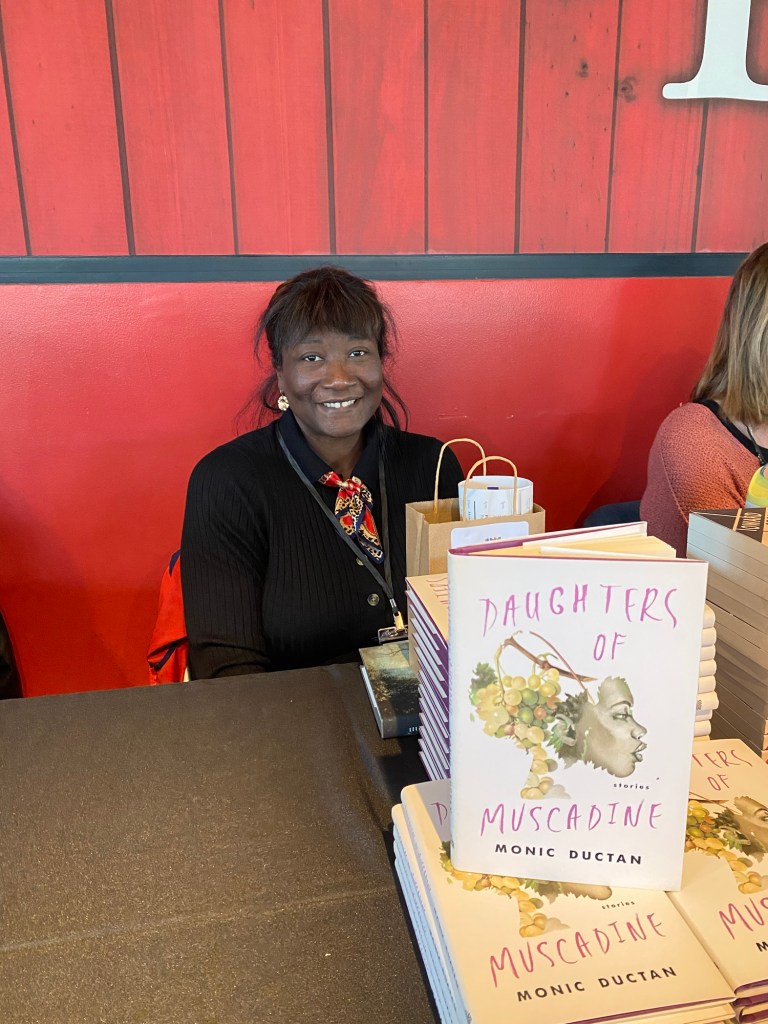
A few people have contacted me on here to congratulate me on my book publication, and several of you have told me you enjoyed reading Muscadine. If you haven’t already, please consider rating my book on Goodreads or Amazon. Thanks! ❤️
Writer, Teacher
Y’all, Daughters of Muscadine has been named the 2023 Weatherford Award winner!
Read more about the award here.
Proud to announce that the Georgia Center for the Book has chosen Daughters of Muscadine for their list entitled, “Books All Georgians Should Read.” Yay!
❤️ Thanks to Nancy Christie for this thoughtful interview:
Proud to say that my book’s cover is the front page of UPK’s fall catalog!
I was interviewed by Will Wolffitt about my forthcoming book, Daughters of Muscadine. Thank you, Will, and I appreciate your website, Speaking of Marvels, a wonderful place to discover new books and authors!
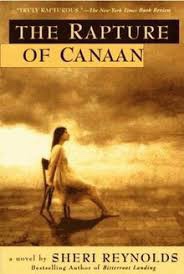
This one is very good and I can’t wait to finish it. It’s about a young girl growing up in a staunchly religious, Christian family. Her grandpa starts his own church and publicly shames those in the faith that he disagrees with. He gets up and gives sermons in which he calls out even his own family members. It’s cringey and abusive. Women in the church are gaslit and told that they must be at fault if they miscarry a baby, and don’t even think about committing formication in this church. The book was first published in 1995, but I think it’s a very important book to read right now in light f everything going on with abortion rights and all the scandals surrounding abuse in churches.
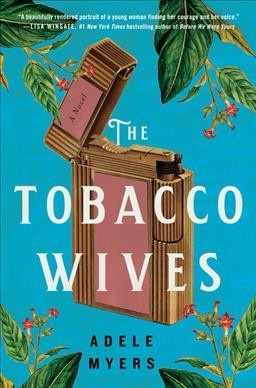
Adele Myers’ historical novel is set in 1946 North Carolina where 15–year-old Maddie has been dropped off to stay with her aunt Etta for the summer in Bright Leaf, a town known for growing tobacco and manufacturing cigarettes. Maddie’s aunt makes gowns and dresses for all the local “tobacco wives,” the upper class women married to the big bosses in the tobacco industry.
When her aunt becomes sick soon after Maddie arrives in town, it’s up to Maddie and her assistant, Anthony, to make the season’s dresses. It’s a lot of pressure on the shoulders of the 15-year-old, but she’s been sewing for years and it looks like she’s capable of pulling it off. One thing I like about Maddie is that she’s so independent. She knows she doesn’t want to end up depending on a man the way that her mother depended on her father. The backstory is that Maddie’s father passed away in WWII right before the novel opens. So our heroine is not only missing her absent mother that summer, but she’s also still mourning her father.
When people around Maddie start to become sick, Maddie struggles with exposing the truth about the toxicity of tobacco, especially in an environment where nearly everyone around her depends on the plant to survive.
The prose style is simple and easy to follow. Myers sprinkles in a few old-fashioned expressions and details about the culture of the time. I listened to the audiobook, and the narrator did a good job of varying her voice to match the various characters. The story is in first-person in Maddie’s voice. The narrator is expressive enough to keep my attention, and the southern accent is subtle.
Today I finished Rick Bragg’s nonfiction book, The Most They Ever Had, which is about cotton mill workers in northeast Alabama in the 20th century. The book is a series of vignettes that include stories of mill life. It takes you on a journey through working conditions before and after textile workers’ unions existed. I quite liked this book, but mostly for personal reasons. One reason is that it reminds me of the small Georgia town I grew up in–Commerce, GA (pop. approx. 6,000). We had an old cotton mill there called Harmony Grove Mill. It shut down somewhere near the century’s end. We also had another cotton mill in Jefferson, Georgia, the town where I attended high school. My mother’s brother, Toby, lost two fingers working in the Jefferson mill, and my oldest brother worked there one summer when he came home from college. Both my parents were poultry plant workers, but they picked cotton when they were growing up back in the ’50s and ’60s.
The other thing I like about Bragg’s book is that he reads the audio version himself. At times throughout, his voice catches ever so slightly, as if he’s struggling to choke back tears. He’s writing not just the personal histories of the mill workers he’s interviewed, but his own family history. His brother worked in an Alabama textile mill before it shut down. His mother picked cotton for years. Bragg has taken his own personal history and combined it with the histories of others, and added a bit of research to create something akin to a patchwork quilt.
Bragg’s book is written with nostalgia, which I’m not quite sure makes any sense. Why be nostalgic for a cotton mill? The pay was low. The job was often dangerous. And yet the book calls it the most they ever had. It reminds me a little of how some Southerners are nostalgic for the old South–a land of 90+ heat with no air conditioning, thick cotton fields, and race prejudice. Yet, sometimes when you hear an old Southerner speak of those days they will smile. I guess we all tend to romanticize childhood, regardless of what type of childhood it was.
My mother will often listen to audiobooks. When I first suggested The Most They Ever Had a few years back, she said it was too sad for her to finish reading it. I put it away myself without reading it because I was judging it based on her reading preferences. My mother hardly turns away from a sad book, so if she couldn’t finish it I didn’t think I’d be able to either. Still, I’m glad that I went back and finished listening to this one.
 Monic Ductan