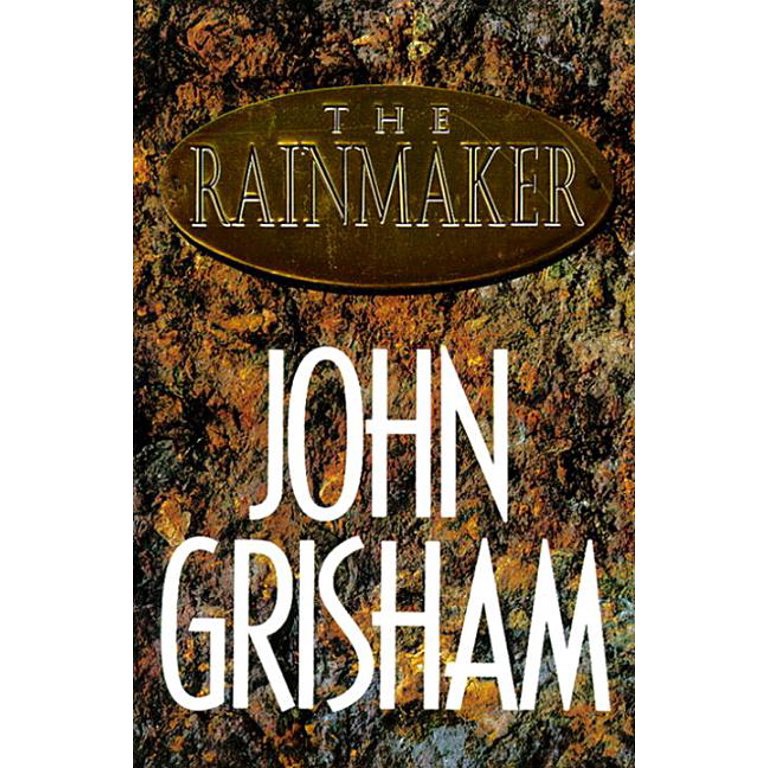
The Rainmaker by John Grisham

Photo credit: Walmart.com

This is the story of Rudy Baylor, a twenty-five-year-old who is just finishing law school and searching desperately for work. He has two cases before he can even get his law license: a silly one in which his elderly landlord wants to leave the bulk of her estate to a televangelist, and a lawsuit in which a poor family sues an insurance company that refuses to pay for their son’s cancer treatment.

I like Rudy, especially because he’s so down on his luck. He very much reminds me of how I felt in college: broke and desperate to make a good living. I do think the book is much longer than it should be. The audiobook is about fifteen hours long (!!!). I’m one of those people who hesitates to read a book longer than 300 pages or so. (I’d cut some of the parts about Rudy leaving his resume at various firms around Memphis. Those parts felt like they could’ve been summed up so that we could move toward the main action more quickly.) I think the book is mostly about the insurance company lawsuit. I see it as a story about poor, disadvantaged people vs. a corrupt business. Reminds me a bit of Erin Brokovich. Much enjoyed! 😃
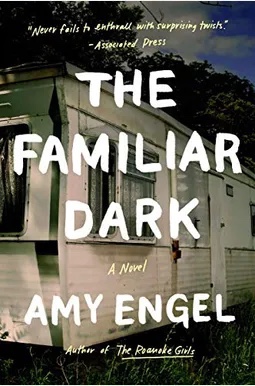
The Familiar Dark by Amy Engel

I finished the whole thing in two days. It’s about a 30-year-old woman whose 12-year-old daughter is murdered in a park along with the daughter’s best friend. The mother, Eve, vows to find her daughter’s killer. She lives in a tiny town in Missouri where both her mother and her ex-lover are into drugs and hard living.

The one thing that bugged me about this one was that Eve, the first-person narrator, keeps a secret from the reader for about half of the book. She simply doesn’t tell us who her daughter’s father is, even though she knew all along. Aside from that, I found this book to be a fun read that kept me guessing. I especially liked the way the author characterizes Eve and her mother. Eve was really shaped by her upbringing, and that comes out on the page. I also appreciated that the book is so short (only about six hours long for the audio version). I despise when authors waste words, and Engel doesn’t waste many. An interesting, entertaining novel. Brava!

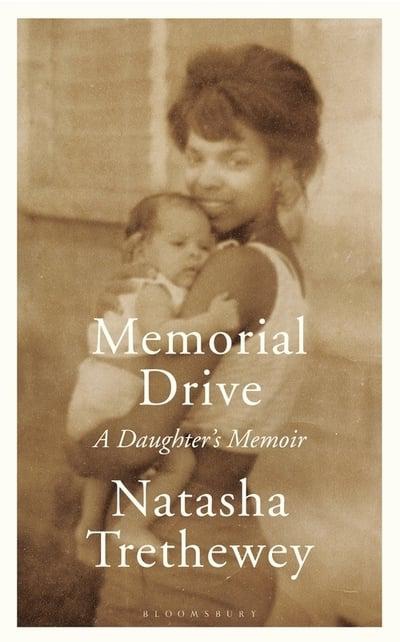
What I’m Reading Now: Memorial Drive by Natasha Trethewey

I’ve taught several of Trethewey’s poems in my literature classes. She’s definitely known more for poetry than nonfiction. This book, Memorial Drive is a memoir. I’m halfway through the audiobook, which is narrated by the author.

Trethewey was born to a white father and black mother in 1966. It was illegal for her parents to marry in Mississippi at that time. In her poetry, she often writes about being mixed race in the South. She definitely discusses Southern race relations in this story, but the real focus of it is on bearing witness to violence, her mother’s murder, and the impact it left on the author. This is a heartbreaking book and definitely worth a read. Just beware of the violent subject matter.

One thing I really like about this book is Trethewey’s penchant for taking tiny parts of her lived experiences and using them to help the reader understand her mindset at the time. For instance, she writes about being driven around the I-285 bypass in Atlanta by her mother’s boyfriend. In so few words, Trethewey clearly communicates how unsafe she felt with him and how powerless she was to do anything about it. She even mentions how triggering I-285 is for her years later when she returns to Atlanta. I could really understand her there. There are particular places that hold a lot of meaning for me and just visiting them can change my mood. I’m sure this is true for everyone.

Trethewey also writes in the second person in several sections of the book. At first, it gave me the feeling that she wants to sound detached in those moments. She even calls herself out for it midway through the book by saying that writing in second person is an attempt to distance herself from the girl who experienced these traumas. Still, I think it goes beyond that. The use of the second person creates a more personal reading experience. It connects with readers by making Trethewey’s story a shared experience with readers who’ve suffered similar traumas. By addressing the reader as “you,” she emphasizes that she’s not alone, that many of us also witnessed childhood trauma and still struggle to cope with it.

Photo Credit: Blackwells.co.uk

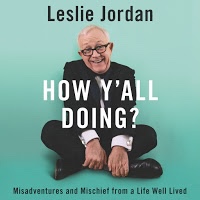
How Y’all Doing? By Leslie Jordan

Leslie Jordan is an actor from Chattanooga who has appeared in many well-known television series and films, such as Will and Grace, American Horror Story, and The Help. I first began to notice him last year during the height of the Covid-19 pandemic when he went viral on Instagram for posting his hilarious short videos:

His audiobook, How Y’all Doing? is just as hilarious as I expected, but it’s also a sweet and personable memoir in which he discusses his time working on a horse farm, his early days in Hollywood as an actor looking to scratch out a place for himself, and some of his most memorable film roles.

I read quite a lot of memoirs, and I think the best ones are honest and don’t try to paint the author in the best light. Jordan is honest about his self-centered nature, how much he craves the spotlight, and even reveals that he once had a drinking problem (though he doesn’t depress the reader with all the details). This memoir isn’t for those looking for a layered or deeply meaningful story, but it was just right for me this past weekend when I needed some laughs, and so I found myself returning to it until I’d gobbled it all up.

Photo credit: Google Books

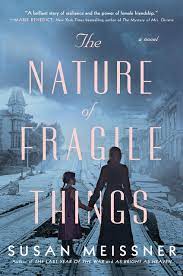
What I’m Reading Now: The Nature of Fragile Things by Susan Meissner

The Nature of Fragile Things is available on my library app. Susan Meissner has written more than a dozen books, but this is the first of hers that I’ve read. I’m about a 1/3 of the way through the audiobook and I’m enjoying it so far. It starts a little slow, which is normally something that I dislike, but I keep reading because the author does a good job of making me curious about the family relationships in this story. It begins with Sophie, an Irish immigrant living in New York who answers an ad for a mail order bride. She moves to San Francisco to meet her match, a widowed man who has a five-year-old daughter. The setup reminded me a lot of The Magic of Ordinary Days because both novels focus on the marriage of two strangers. The setup is a good one, too, because as readers we wonder what sort of strife this arranged marriage will create. Will she be attracted to her husband? Will he treat her cruelly?

These basic questions are answered right away. Her husband is an attractive man who owns a comfortable home and lets her mother his daughter in basically whatever way she pleases. Still, you can’t help but sense that something is awry with Sophie’s husband. He shows no affection for her, which isn’t that unusual sense they’re strangers, but he also shows no affection for his daughter either, not even so much as a hug or a kiss. The husband goes out of town on business and gives vague answers to questions about where he’s going, what he does, and when exactly he’ll return.

One day, a mysterious woman shows up at Sophie’s house while her husband is out of town. The woman gives Sophie some shocking news that changes the entire family dynamic and what both women think of Sophie’s husband. I won’t spoil it for you here, but that chapter really shocked me and made me sit up and pay attention.

The other thing to know about this one is that the San Francisco earthquake of 1906 is a key event in the story. I haven’t reached the earthquake part of the book yet, but I can clearly see that Meissner is dropping breadcrumbs to help the reader piece together a family mystery while we’re also anticipating the catastrophic earthquake. I love when an author complicates things with the emergence of several high stakes problems to solve at once.

This is exactly my type of book. I enjoy historicals and stories that focus on family strife. I’m also enjoying the lovely performance of the narrator who voices Sophie’s Irish accent. Looking forward to finishing this one!

Photo taken from Amazon.com

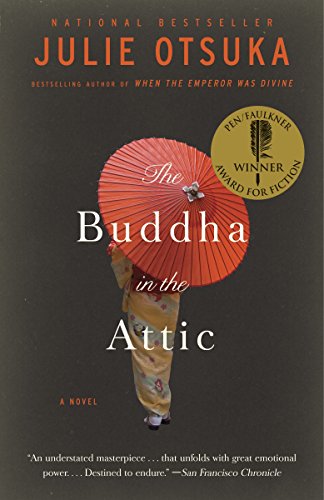
The Buddha in the Attic

Julie Otsuka’s book, The Buddha in the Attic is the story of a group of Japanese picture brides who come to America in the early 1900s to marry a group of Japanese men. The women have never met their husbands before they arrive, and many are gypped into marriage by lying men who claim to have a good, middle-class life, but instead are struggling financially and need someone to help run a farm or do other manual labor. We also get to see how the brides’ American-born children assimilate into American culture. Throughout the story, the wives also contend with racism directed at them from whites, especially after Pearl Harbor. I think the internment of Japanese-Americans during the second world war is something that doesn’t get as much attention in history classes as it deserves, though hopefully this is changing now. When I was a high school and college student 15-25 years ago, we mostly focused on what was happening in Europe during that war, and I don’t remember ever being taught that Japanese people right here in America were being unjustly held as prisoners. Kudos to Julie Otsuka for teaching me that and allowing me to give that knowledge to my American literature students this semester when I taught this gem of a book for the first time. Some students were put off by the book’s narrative style. It’s told in a plural first-person. After a while, I got used to it and found the repetition rather poetic. I’ll teach it again next semester. 

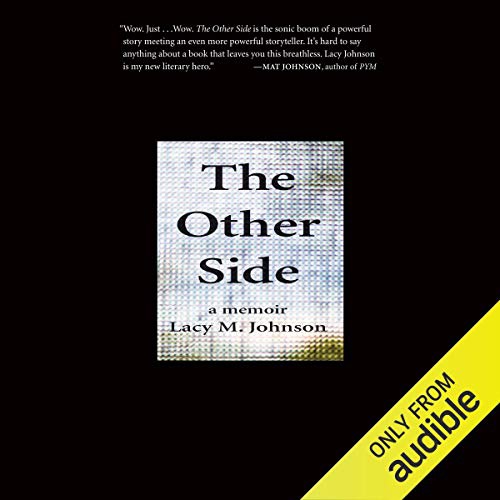
What I’m Reading Now: The Other Side by Lacy M. Johnson

The Other Side, a memoir written by Lacy M. Johnson, at first feels like the story of her rape and attempted murder at the hands of her ex-boyfriend. However, it’s more than that. It also tells the story of a woman who continues to suffer PTSD as a victim of such a crime as well as a constant fear that her tormentor will come back for her.

The structure of the memoir might alienate some readers because the transitions between events are not smooth. She skips back and forth and back between childhood events, details about ex-lovers, and more recent details of her life with her husband and children. At times it took me a moment to figure out where we were in time, which annoyed me. Perhaps the author wants the narrative to give off a feeling of confusion and uncertainty, as if she’s trying to somehow give the reader a teeny tiny glimpse of what it might be like to live in a fractured mind. While I see the possible reasons for telling the story this way, I can still say it frustrated me.

The audio version I listened to was read by the author and lasts only four hours. Though the book is succinct, at times I questioned why she included certain details about her life after the rape that didn’t feel directly connected to the rape. Perhaps she did it to give the reader a sense of her personality and life circumstances.

One positive thing I can say about this author is that she doesn’t try to charm the reader into liking her. A lot of nonfiction writers choose to present themselves in a “good” light, but not Johnson. She doesn’t shy from things that some women would be ashamed to admit, such as her time working as a stripper or that she lived with her abuser for over two years before he kidnapped her. Given people’s tendencies to blame a victim for abuse, I think adding these details shows both courage and honesty on Johnson’s part. Brava. 


My Favorites

I’m an English teacher and have also worked at a public library, which means people often ask which authors and books I enjoy. I have a penchant for Southern fiction, working-class literature,  and African-American literature. Here’s a short list of some of my favorite works:

Coming of Age in Mississippi by Anne Moody

Outer Banks by Anne Rivers Siddons

A Raisin in the Sun by Lorraine Hansberry

Upstate by Kalisha Buckhanon

Gap Creek by Robert Morgan

Big Stone Gap by Adriani Trigiani

“The Shipfitter’s Wife” by Dorianne Laux”

“What Do Women Want” by Kim Addonizio

“Scheherazade” by Richard Siken

Bastard Out of Carolina by Dorothy Allison

The Color of Water by James McBride

“Going to Meet the Man” by James Baldwin

“Ruby Tells All” by Miller Williams

“The Lesson” by Toni Cade Bambara

The Road to Memphis by Mildred D. Taylor

“When We Were Young and Confederate” by Jeremy Collins

“Superman and Me” by Sherman Alexie

“Barn Burning” by William Faulkner

Saving Grace by Lee Smith

Heavy by Kiese Laymon

Streetcar Named Desire by Tennessee Williams

Dolores Claiborne by Stephen King

”The Third and Final Continent” by Jhumpa Lahiri

“Nilda” by Junot Diaz

”Letter from Birmingham Jail” by Martin Luther King, Jr.

“Bullet in the Brain” by Tobias Wolff

“Time and Distance Overcome” by Eula Biss

Narrative of the Life of Frederick Douglass by Frederick Douglass

Maude by Donna Mabry


Blog at WordPress.com.

Up ↑