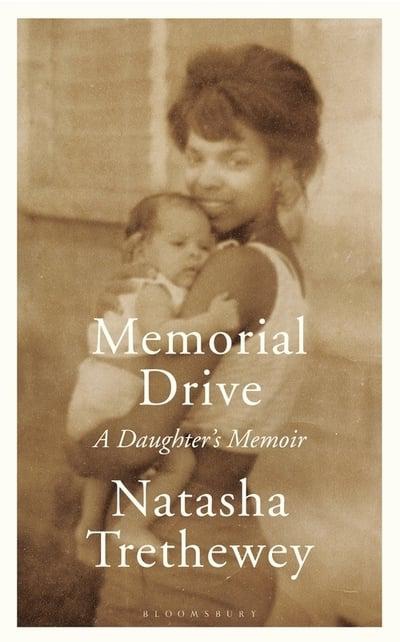
I’ve taught several of Trethewey’s poems in my literature classes. She’s definitely known more for poetry than nonfiction. This book, Memorial Drive is a memoir. I’m halfway through the audiobook, which is narrated by the author.
Trethewey was born to a white father and black mother in 1966. It was illegal for her parents to marry in Mississippi at that time. In her poetry, she often writes about being mixed race in the South. She definitely discusses Southern race relations in this story, but the real focus of it is on bearing witness to violence, her mother’s murder, and the impact it left on the author. This is a heartbreaking book and definitely worth a read. Just beware of the violent subject matter.
One thing I really like about this book is Trethewey’s penchant for taking tiny parts of her lived experiences and using them to help the reader understand her mindset at the time. For instance, she writes about being driven around the I-285 bypass in Atlanta by her mother’s boyfriend. In so few words, Trethewey clearly communicates how unsafe she felt with him and how powerless she was to do anything about it. She even mentions how triggering I-285 is for her years later when she returns to Atlanta. I could really understand her there. There are particular places that hold a lot of meaning for me and just visiting them can change my mood. I’m sure this is true for everyone.
Trethewey also writes in the second person in several sections of the book. At first, it gave me the feeling that she wants to sound detached in those moments. She even calls herself out for it midway through the book by saying that writing in second person is an attempt to distance herself from the girl who experienced these traumas. Still, I think it goes beyond that. The use of the second person creates a more personal reading experience. It connects with readers by making Trethewey’s story a shared experience with readers who’ve suffered similar traumas. By addressing the reader as “you,” she emphasizes that she’s not alone, that many of us also witnessed childhood trauma and still struggle to cope with it.
 Monic Ductan
Leave a comment